Supplier Audit and Sustainability Capability
Supplier Audit
Compal has established a supplier audit mechanism centered on risk management, integrating the RBA Code of Conduct, ESG risks, and Business Continuity Planning (BCP) into its governance framework. Through systematic risk identification and data analysis, suppliers are categorized and managed according to transaction significance, supply disruption risks, and ESG assessment results. Suppliers that have been rated as high-risk for two consecutive years, particularly core suppliers, are designated as priority audit targets for the annual audit program. This risk-based approach enables Compal to identify and include high-risk or high-impact suppliers in its annual audit plan, thereby strengthening supply chain stability and sustainability management capabilities.
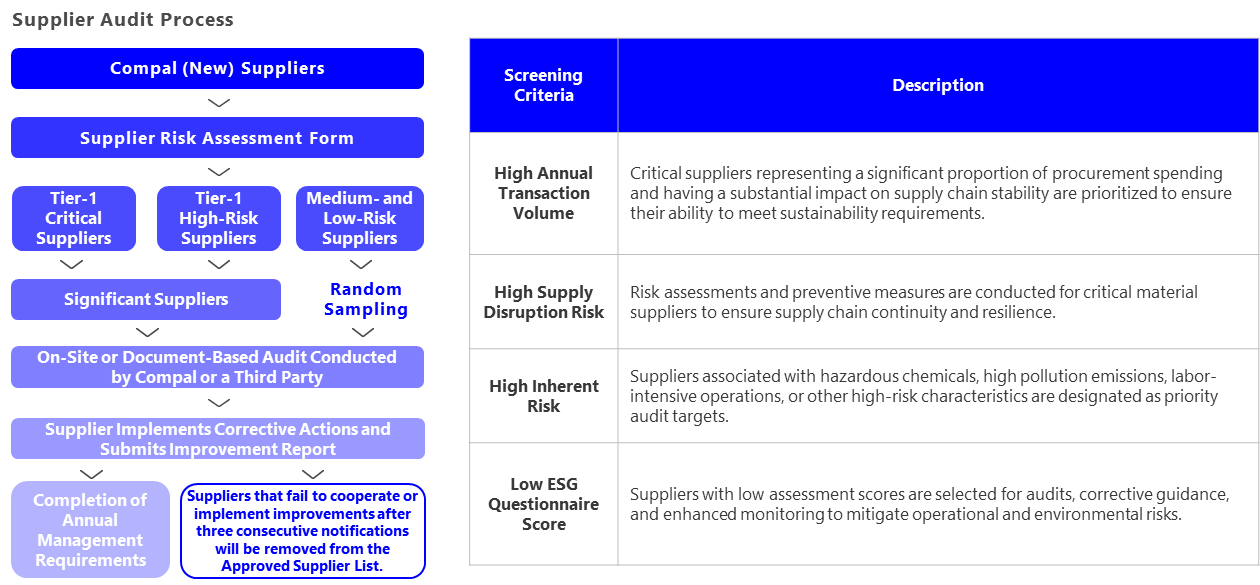
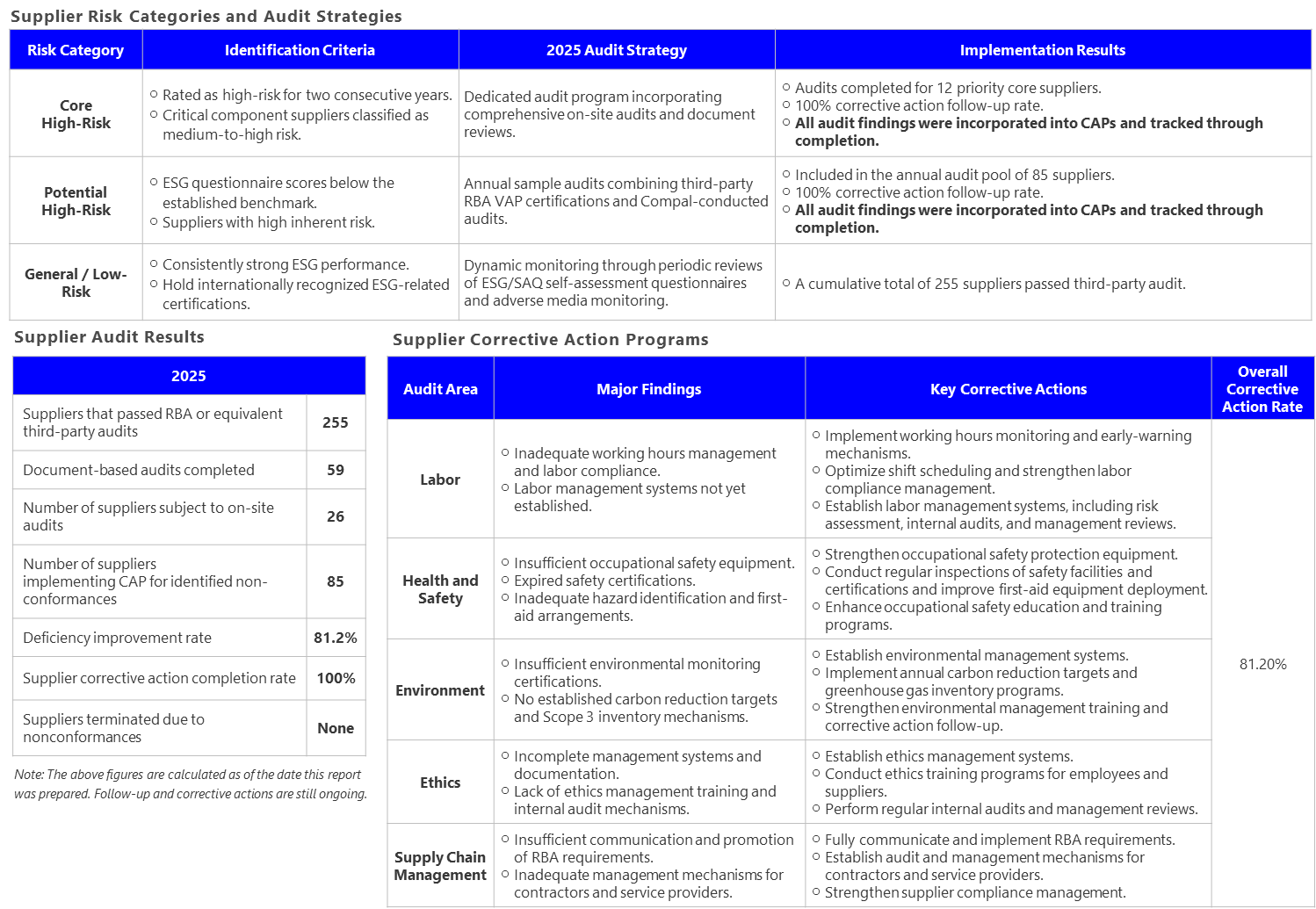
In 2025, Compal completed ESG/RBA audits for a total of 85 suppliers, including 26 comprehensive on-site audits and 59 document-based audits. Among these, 12 core suppliers identified as continuously high-risk or medium-to-high-risk were prioritized for auditing to ensure audit resources were effectively allocated to focused on critical risk areas. For audit findings, Compal has established an “Identify–Improve–Track” corrective action management mechanism requiring suppliers to submit Corrective Action Plans (CAPs) with a 100% submission rate, accompanied by regular progress reporting. Management guidance and technical recommendations are provided when necessary. Suppliers that fail to implement effective corrective actions after repeated notifications may be subject to procurement volume reductions or termination of business relationships in accordance with Compal’s supplier management procedures. In 2025, the overall corrective action completion rate reached 81.2%, while the corrective action follow-up rate reached 100%, demonstrating effective control of key supply chain risks.
Building Supply Chain Sustainability Capabilities
Compal is committed to advancing responsible supply chain management by systematically integrating sustainability principles intoits supply chain governance framework. Through a combination of management mechanisms, including policy development, supplierengagement, and capability building, the Company continuously strengthens supply chain management capabilities acrossenvironmental, social, and governance (ESG) dimensions. Guided by the Supplier Code of Conduct as the foundation of itsgovernance framework, Compal has established digitalized operational and management mechanisms through the VIP (VendorIntegration Portal) Smart Supplier Management System, enhancing consistency in supply chain governance and improvinginformation transparency. At the same time, through supplier conferences, the Compal ESG Go Training platform , and supply chaindecarbonization collaboration projects, Compal continues to enhance suppliers’ ESG management capabilities and works closely withsupply chain partners to drive the low-carbon transition and the development of a sustainable value chain.
Through supplier development measures, including CDP participation, on-site audits, document reviews, and the ONE+N Net-Zero Program, Compalcontinues to build the sustainability capabilities of its Significant Suppliers. In 2025, Compal supported 74 Significant Suppliers through thesesustainability development measures
◼Supplier Conferences
Compal leverages supplier conferences as a sustainability communication and capability-building mechanism with supply chain partners, systematically communicating the Company’s sustainability policies, responsible supply chain management requirements, and international sustainability trends. These efforts help suppliers strengthen governance capabilities and enhance risk management maturity. The conferences also serve as an important platform for supplier engagement and capability enhancement, encouraging suppliers to participate collectively the sustainable transition.
In 2025, Compal hosted three online supplier conferences, with a total of 972 suppliers participating. The conferences focused on key topics including responsible minerals management, ESG risk assessment, climate-related disclosures, energy conservation and carbon reduction trends, and best practices in climate management approaches. In addition, through the CDP Supplier Training Workshops, Compal helped suppliers gain a better understanding of climate disclosure frameworks and carbon management methodologies, thereby improving climate information transparency and strengthening supply chain carbon management capabilities.
◼Intelligent Sustainable Supply Chain
 To improve supply chain management efficiency and information transparency, Compal continues to promote the digital transformation of supply chain management. The VIP Smart Supplier Management System (Vendor Integration Portal) serves as a key digital platform for supply chain governance. The platform integrates supplier quotations, order management, ESG questionnaires, and sustainability policy communications into a unified system, enabling comprehensive digitalized and systematic supply chain management.
In addition, the platform incorporates automation and data analytics capabilities that transform supply chain data into real-time monitoring and risk management information, significantly enhancing data management efficiency and anomaly detection capabilities. From a governance integration perspective, the online Supplier Code of Conduct (COC) signing mechanism was successfully integrated into the system in 2025. Through the VIP platform, traceable digital signature records are established to ensure consistency and transparency in supply chain governance.
◼Compal ESG Go Training Platform- ESG GO Training platform
Embracing the spirit of “Growing together by supporting smaller partners with larger ones,” Compal established the Compal ESG Go Training Platform, a supplier learning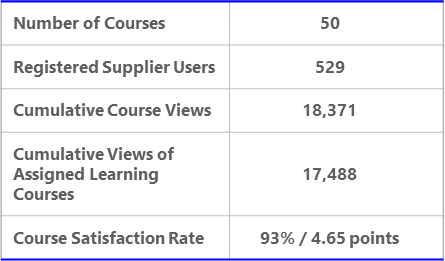 platform designed to enhance the maturity of sustainable supply chain governance through a systematic online empowerment mechanism. The curriculum is closely aligned with international sustainability trends and covers key topics including climate change and carbon management, environmental regulations, responsible minerals, and human rights protection. Compal is committed to transforming sustainability requirements into practical capabilities for suppliers. In 2025, the platform was further optimized and expanded to offer 50 thematic and modularized courses. In addition to providing in-depth professional content, the platform also features videos showcasing the carbon reduction achievements of the “ONE+N Net-Zero Project.” Through the sharing of successful industry-leading practices, suppliers are able to progressively establish management systems aligned with international standards according to their own levels of management maturity.
Compal removes geographical barriers and enables efficient dissemination of sustainability values while strengthening supply chain resilience through the digital platform. By incorporating scenario-based learning and practical case studies, the platform enhances suppliers’ self-management capabilities in environmental and social topics
◼Mentor-Based Approach to Carbon Reduction
To proactively respond to global climate resilience challenges and advance toward the vision of net-zero emissions by 2050, Compal launched its “Lead-supplier strategy(One+N) ” initiative, guiding supply chain in accelerating decarbonization transformation. Through the ONE+N Electronic Supply Chain Net-Zero’ program, 34 suppliers jointly committed to net-zero targets, while 9 suppliers with higher carbon emissions received in-depth carbon reduction guidance and support. Originally targeting a reduction of 10,000 tCO₂e within two years, the program significantly exceeded expectations through close collaboration between Compal and its suppliers. By 2025, the project achieved a total reduction of 14,761 tCO₂e, representing 147% of the original target, demonstrating the remarkable effectiveness of collaborative supply chain decarbonization efforts.
Compal assembled a Low Carbon Guidance Team by integrating internal and external experts. Through the deployment of carbon data management platforms and technical solutions, the team assisted suppliers in optimizing energy management performance while ensuring that all carbon emission and inventory data were verified by independent third parties to enhance transparency and credibility. To further amplify the impact of the initiative, Compal invited the 9 participating suppliers to document their successful carbon reduction and energy-efficiency improvement projects, highlighting key technologies and implementation experiences through video presentations. These videos were subsequently made available on the Compal ESG Go Training Platform for all suppliers to access and learn from. Through benchmarking and the broad dissemination of professional knowledge, Compal aims to transform individual success stories into shared competitive advantages across the entire supply chain, thereby fostering a resilient and low-carbon collaborative ecosystem.
◼Leading Supply Chain Transparency: CDP
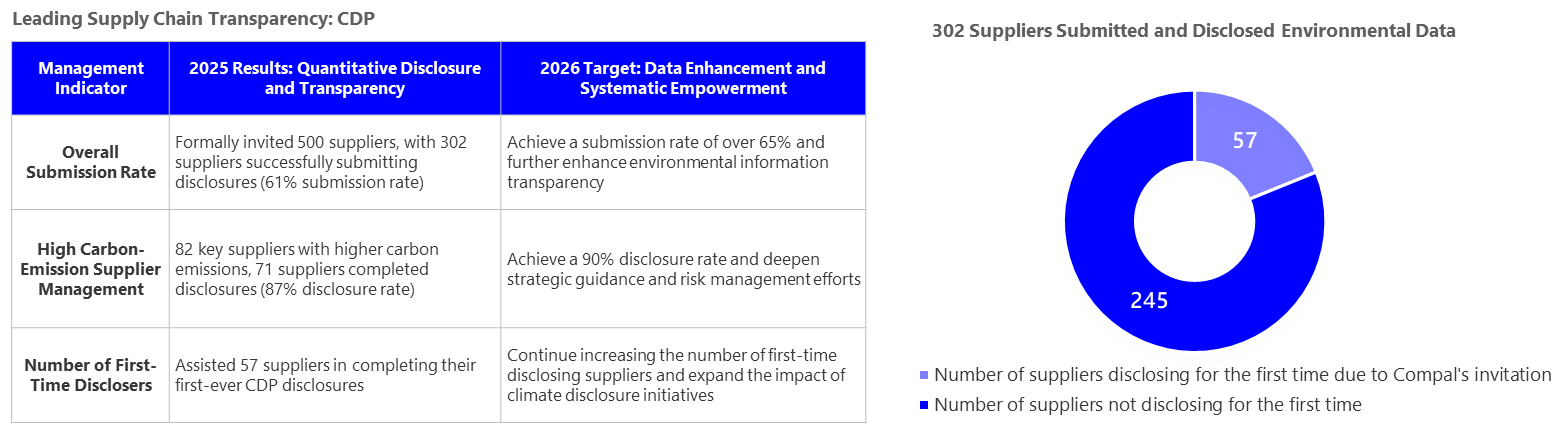
Compal actively promotes supplier alignment with international climate assessment frameworks by inviting g suppliers to participate in the CDP, thereby advancing scientific environmental data management practices. In 2025, Compal expanded its influence by formally inviting 500 Tier-1 and key suppliers to participate in environmental disclosure, successfully supporting 302 suppliers in submitting environmental data. For the 82 suppliers with the most significant carbon emission impacts, Compal implemented an intensive engagement strategy, resulting in 71 suppliers completing disclosures, ensuring environmental data transparency across critical hotspots within the value chain. In addition, Compal successfully guided 57 suppliers to complete their first-ever CDP disclosures, demonstrating the Company's strong capability to empower suppliers and drive broader participation in climate disclosure initiatives.
Looking ahead to 2026, Compal will shift its governance focus from “Qisclosure Participation” to “Qualitative Improvement”, deepening data quality management and providing technical support to high-carbon-emitting suppliers. Through more systematic carbon emission and inventory training programs and carbon reduction strategy guidance, Compal aims to help participating suppliers transition from passive compliance to proactive climate management, thereby improving the accuracy, reliability, and decision-making value of environmental data. By establishing a data-driven green supply chain governance framework, Compal will continue to work closely with suppliers to strengthen global competitiveness in climate resilience and decarbonization transformation, while jointly fulfilling the long-term commitment of achieving net-zero emissions across the value chain.