Climate Action
In response to the global low-carbon transition, increasingly frequent extreme climate events, and rising customer expectations for supply chain decarbonization, climate-related issues have become key factors influencing Compal’s business strategy, financial planning, resource allocation, and long-term competitiveness. Compal incorporates climate-related risks and opportunities into its sustainable development and risk management framework and continues to advance greenhouse gas (GHG) inventory, third-party verification, energy efficiency improvements, renewable energy adoption, and value chain decarbonization to strengthen the Company’s resilience against both the low-carbon transition and the physical impacts of climate change.
Compal supports the objective of the “Paris Agreement” to limit the global temperature increase to within 1.5°C and has adopted “Technology Upgrade × Carbon Reduction" as the central theme of its climate action strategy. Following the Science Based Targets (SBT) carbon reduction pathway, the Company has established short-, medium-, and long-term goals, incorporating Scope 1, Scope 2, and Scope 3 emissions reductions, climate risk governance, internal carbon pricing, and climate resilience enhancement as key priorities of its transition initiatives. This chapter is prepared with reference to the IFRS S2 Climate-related Disclosures framework and presents the four core pillars of governance, strategy, risk management, and metrics and targets. It also draws upon the IFRS S2 climate-related disclosure examples issued by the competent authorities and the Accounting Research and Development Foundation (ARDF) to enhance the completeness of disclosures regarding climate governance, value chain management, financial impacts, scenario analysis, climate resilience, and decarbonization performance.
In addition, Compal actively implements natural capital governance and encourages value chain partners to jointly protect biodiversity and forest conservation. We have issued our Biodiversity and No-Deforestation Policy, which applies to all subsidiaries worldwide in which Compal holds a controlling interest of over 50%. This demonstrates the Company's strong commitment to its responsibility in nature conservation.
In 2025, Compal achieved a “Leadership Level” rating in both the CDP Climate Change and Water Security questionnaires, reflecting continuous improvement and external recognition of its climate and water resource risk management capabilities.
Governance: Climate Governance and Transition Framework
◼The respective roles and responsibilities of the governance body and management are summarized in the table below.
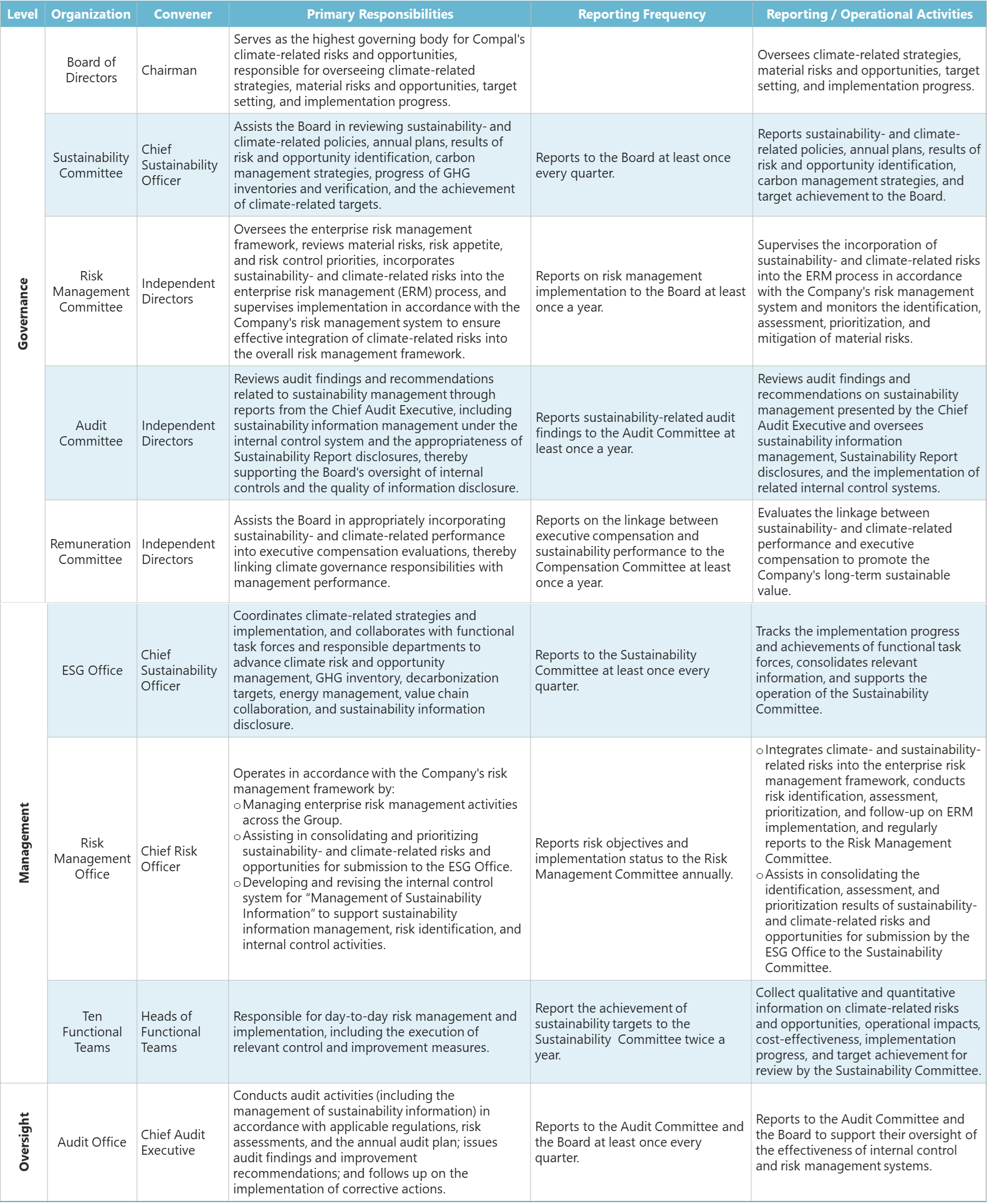
Climate and Sustainability Performance-Linked Incentive Mechanism
The Company has established a sustainability performance incentive mechanism to recognize and reward employees and teams that make tangible contributions to climate action, energy conservation and carbon reduction, renewable energy, greenhouse gas management, and other ESG projects. Recognition and rewards are determined based on actual achievements and the level of contribution. Awards include commendations and merit awards, with corresponding monetary bonuses granted in accordance with the Company’s reward and disciplinary policies.
Eligible recipients include units responsible for project planning and implementation, cross-functional execution teams, and employees at operating sites who directly participate in and contribute to performance achievements. Through this mechanism, the Company recognizes their contributions to its climate and sustainability goals and encourages the continued implementation of related improvement initiatives.
To strengthen senior executives' accountability for climate-related risks and opportunities and to support the Company's Sustainable Development strategy, Compal has incorporated climate-related performance indicators into the annual performance evaluation framework for senior executives and linked them to annual variable compensation.
The annual performance evaluation for senior executives takes into account the Company's overall business performance, departmental operating results, individual performance, and ESG-related performance. Achievement of ESG- and climate-related objectives accounts for 5% of the overall annual performance evaluation weighting.
The relevant performance indicators are established based on the Company's annual sustainable development strategy and climate management objectives. They encompass greenhouse gas emissions reduction, energy management, carbon emissions management, and other climate-related management indicators approved by the Company. Implementation progress and performance against these indicators are reviewed on a regular basis.
When reviewing the annual variable compensation of senior executives, the Remuneration Committee considers not only the Company's overall operating performance and individual performance but also the achievement of climate-related performance targets. The Committee then submits its recommendations to the Board of Directors to ensure that the compensation system remains aligned with the Company's Sustainable Development strategy, climate governance direction, and medium- to long-term climate objectives.
Looking ahead, the Company will continue to review the appropriateness and weighting of climate-related performance indicators and further refine its compensation framework in line with the Sustainable Development strategy and climate governance objectives, thereby strengthening management's accountability for creating long-term corporate value and advancing Sustainable Development.
Strategy: Climate Strategy and Transition Plan
■ Resource Investment in Climate Transition
The Company has continuously invested in green electricity procurement and the transition to renewable energy. To accelerate its net-zero transition and ensure the achievement of interim renewable energy targets, the Company plans to invest at least an additional NT$42.24 million from 2026 to 2030 as baseline funding for green electricity procurement and related transition initiatives.
Strategic Implications of Climate-Related Risks and Opportunities
This amount represents the minimum investment estimated based on current energy demand, the Company’s target pathway, and prevailing market conditions. Going forward, the investment will be reviewed and adjusted on a rolling basis in response to changes in production capacity deployment, electricity demand growth, green electricity prices, and supply availability. Accordingly, the overall scale of investment may increase further.
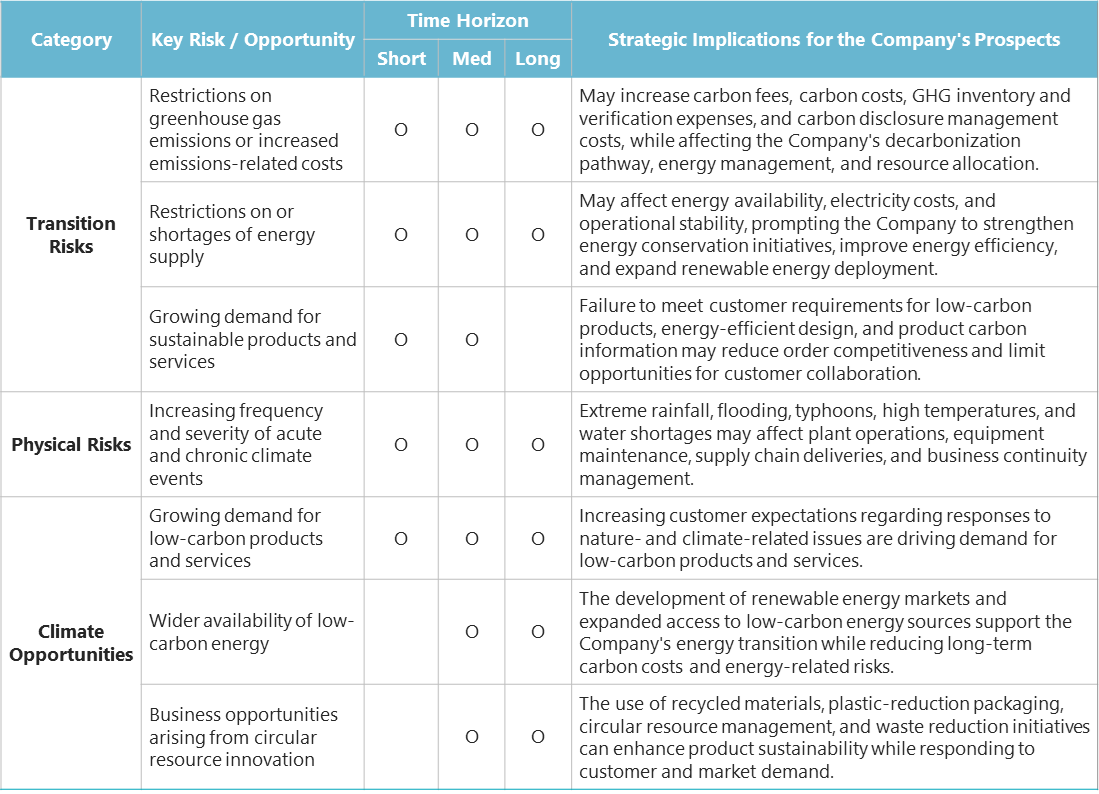
Based on its business characteristics, industry trends, regulatory developments, customer requirements, international standards and assessment frameworks, and evolving climate scenarios, Compal climate-related risks and opportunities that could reasonably be expected to affect the Company's prospects. The identification process is conducted with reference to the IFRS S2 Climate-related Disclosures framework, SASB industry metrics, customer supply chain decarbonization requirements, key CDP and Corporate Sustainability Assessment (CSA) evaluation criteria, internal operational data, and the results of sustainability risk and opportunity assessment questionnaires. The assessment focuses on issues most relevant to the Company's environmental management, energy use, greenhouse gas (GHG) emissions, low-carbon product transition, and value chain collaboration.
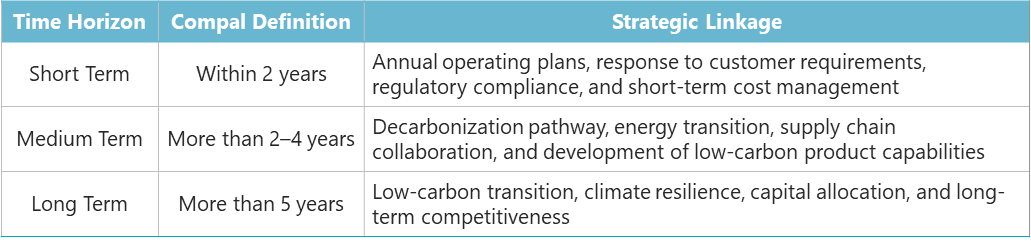
In alignment with the Company's strategic planning, operational management cycle, and climate target implementation timeline, the impacts of climate-related risks and opportunities are classified into short-, medium-, and long-term time horizons. These time horizons serve as the basis for evaluating the potential impacts of climate-related risks and opportunities on the Company's operations, strategy, and financial planning.
Climate-Related Risks and Opportunities and Their Time Horizons
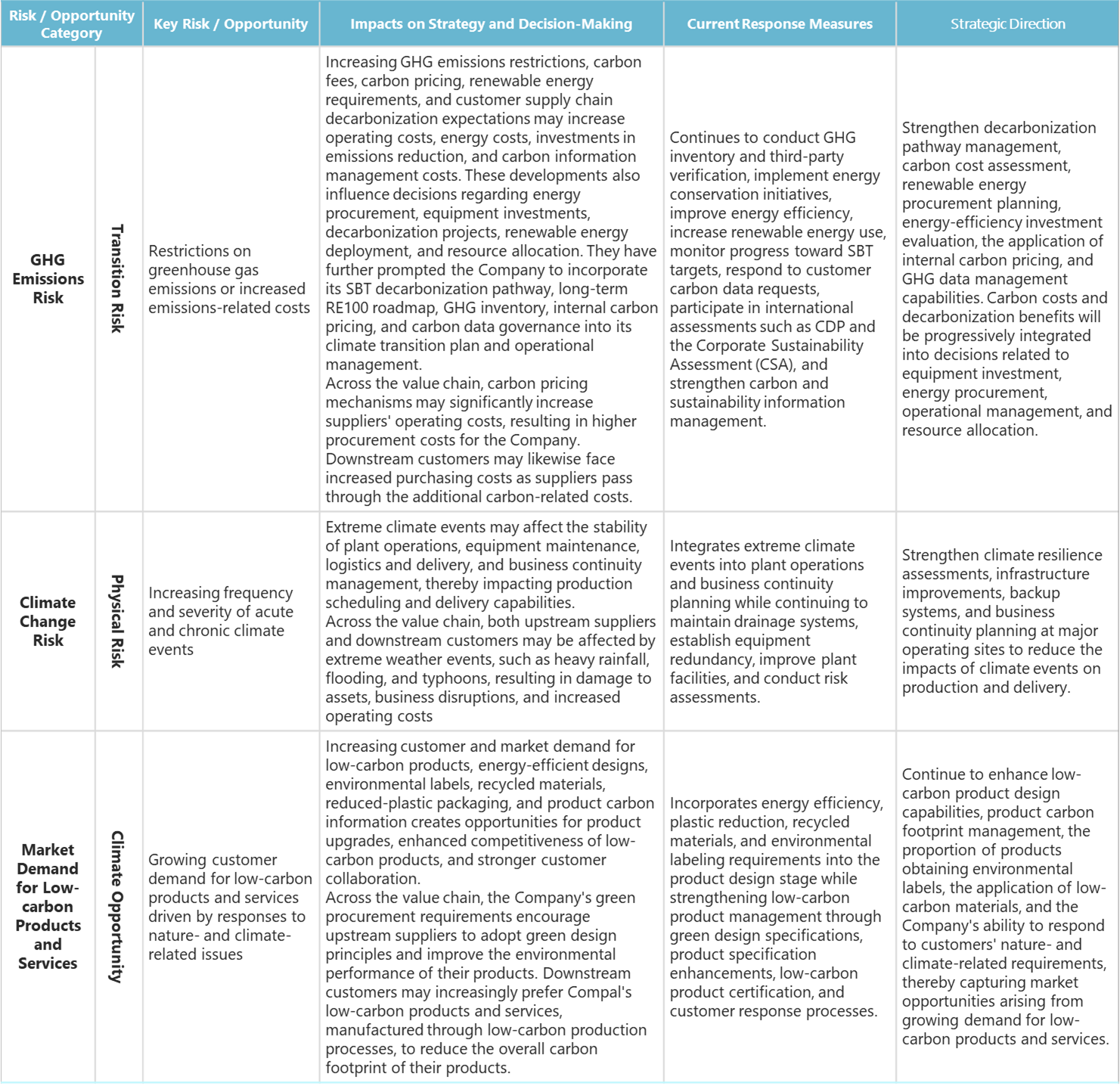
MechanismImpacts of Climate-Related Risks and Opportunities on Strategy, Decision-Making, and the Transition Plan
Compal incorporates climate-related risks and opportunities into its strategic planning, operational management, resource, and transition planning. Guided by the theme "Technology Upgrade × Carbon Reduction," the Company addresses the impacts of the low-carbon transition and physical climate risks through initiatives including low-carbon product design, improved energy efficiency, renewable energy adoption, supply chain decarbonization collaboration, greenhouse gas (GHG) management, and enhanced operational resilience.
■ Climate Transition Plan and Strategic Action
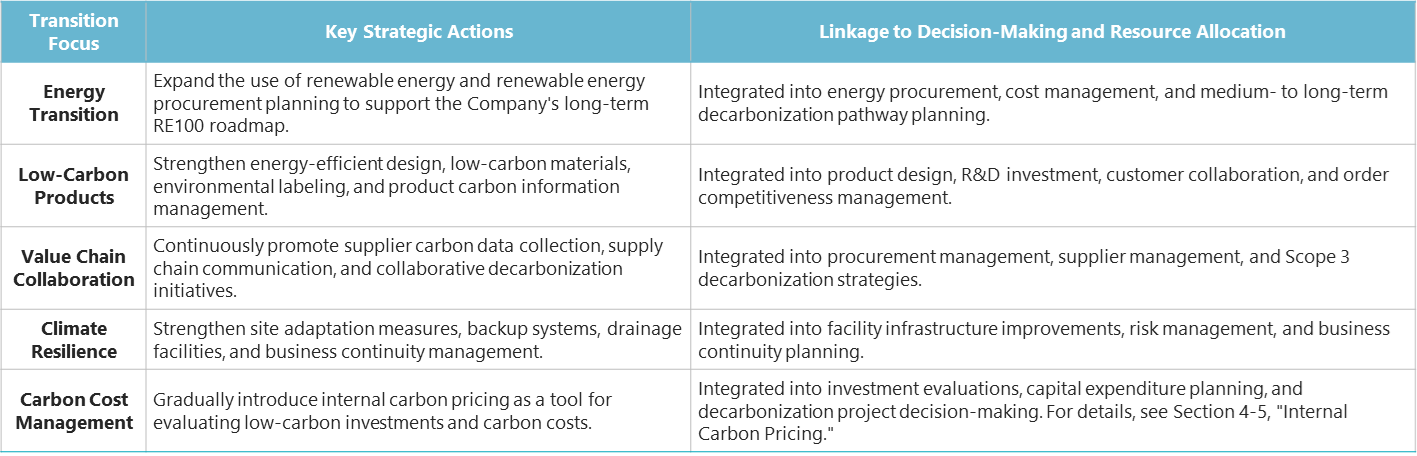
In line with Science Based Targets (SBT) pathway and long-term RE100 commitment, Compal is implementing its climate transition plan by integrating Scope 1, Scope 2, and Scope 3 decarbonization initiatives into operational management and value chain collaboration. The transition plan focuses on energy transition, low-carbon products, value chain collaboration, climate resilience, and carbon cost management as its principal strategic actions, progressively linking these initiatives to the Company's operational decision-making, resource allocation, and financial planning.
Financial Impacts of Climate-Related Risks and Opportunities
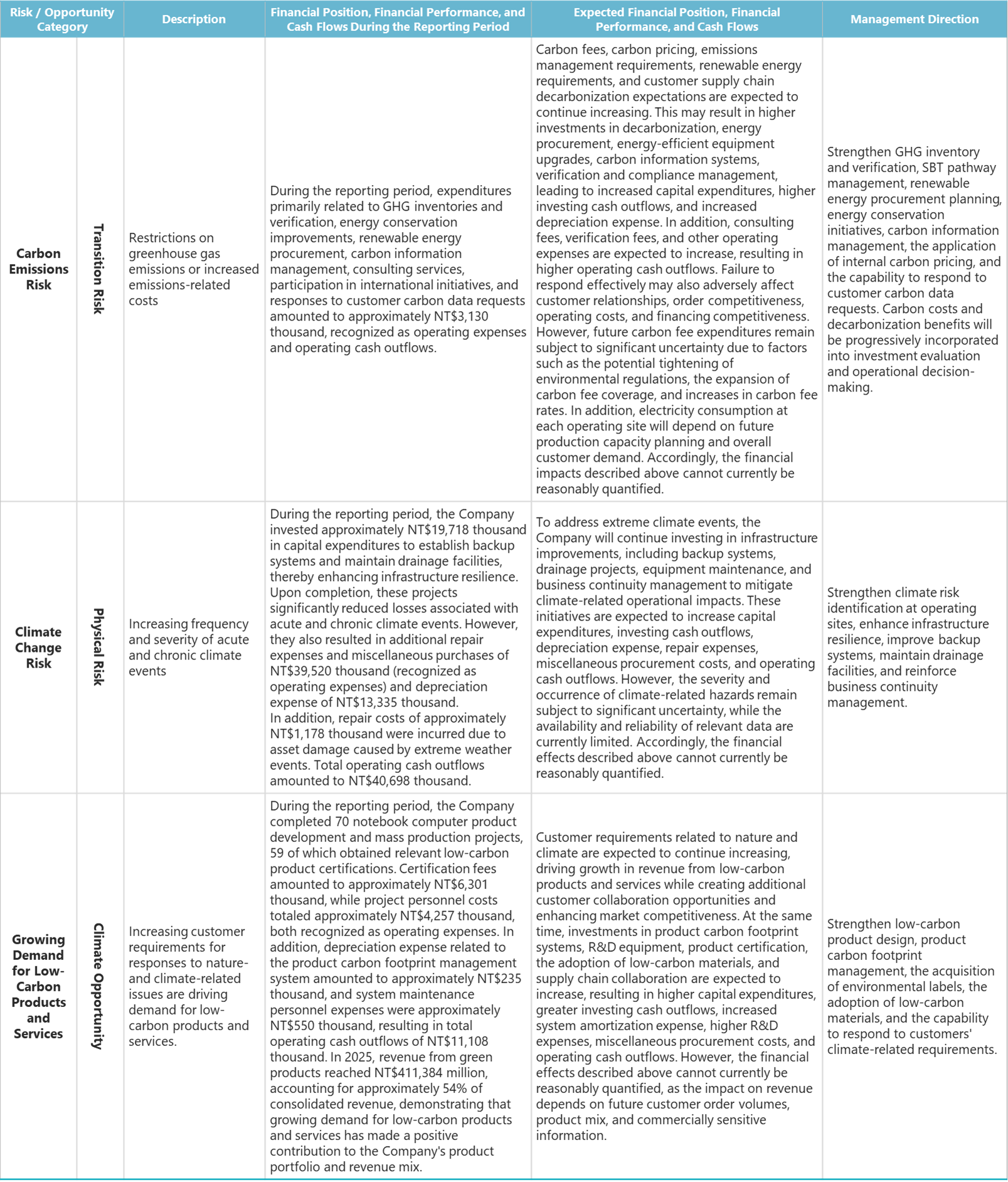
Climate-related risks and opportunities may affect the Company's current and future financial position, financial performance, and cash flows through factors such as operating costs, capital expenditures, revenue and customer orders, asset resilience, and cash flow. Based on the representative climate-related risks and opportunities identified, Compal has conducted a preliminary assessment of their financial impacts with reference to available management information and financial data. The assessment serves as a basis for future financial planning, budgeting, resource allocation, and capital expenditure evaluation.
Climate Resilience and Scenario Analysis
Using a range of scenario assumptions, the Company evaluates the potential impacts of climate change and the low-carbon transition on its operating sites, supply chain, product demand allocation, energy consumption, capital consumption, and financial performance. The analyzes also evaluate the resilience of the Company's existing strategy and business model under a range of climate scenarios. These scenarios are based on the latest internationally recognized climate pathways and are aligned with the Company's commitment to supporting the goals of the Paris Agreement, providing a comprehensive basis for evaluating and responding to climate-related risks and opportunities.
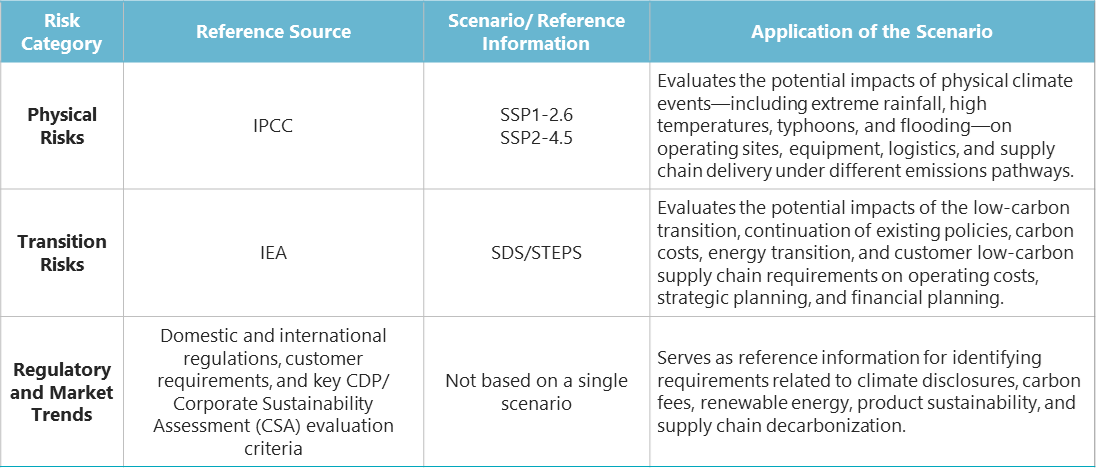
Based on the scenario analysis results, Compal Group reviews climate-related risks across all new and existing operating sites. The review identifies physical climate risks, including extreme rainfall, flooding, typhoons, high temperatures, water shortages, and power supply instability, and assesses adaptation needs according to the risk level of each site.In response to the identified risks, the Company is progressively strengthening adaptation measures, including drainage system maintenance, backup power and critical equipment management, improvements in water and energy efficiency, and environmental monitoring at operating sites. All new and existing operating sites are incorporated into business continuity plans and climate risk management mechanisms. For high-risk sites, the Company continues to plan adaptation actions, resource allocation, and implementation schedules, while establishing progress-tracking mechanisms to enhance operational resilience against physical climate risks.
■ Climate Resilience Assessment Results and Strategic Applications
Based on the results of the scenario analysis, the Company evaluates the potential impacts of climate-related risks and opportunities on its business model, value chain, and financial planning, and incorporates the findings into its climate strategy, risk management, and transition plan.
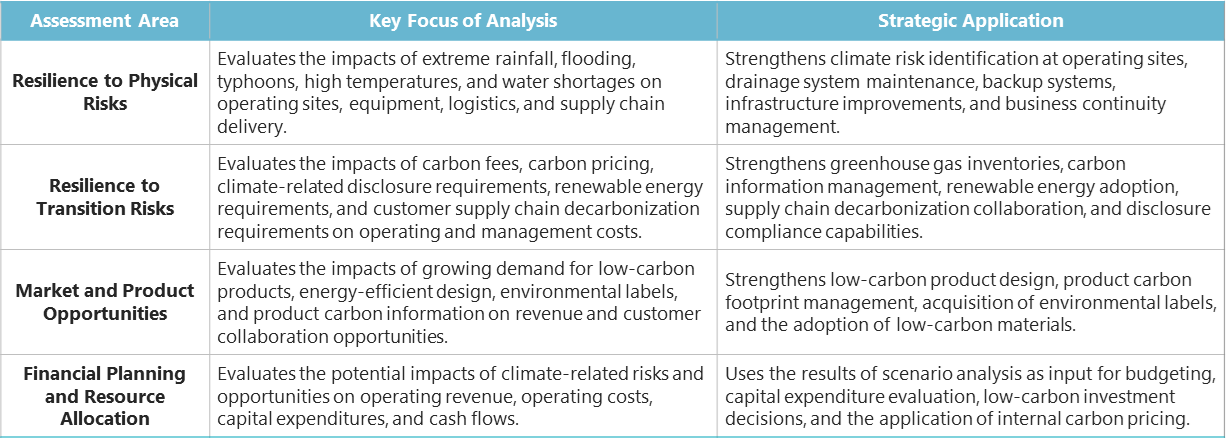
Overall, the scenario analysis indicates that both the low-carbon transition and physical climate events may affect the Company‘s operating costs, capital expenditures, product strategy, supply chain management, and customer relationships. Over the short, medium, and long term, Compal will continue to review the climate scenario assumptions, data sources, and assessment methodologies and will incorporate the analysis results into its risk management, strategic planning, financial assessments, and transition plan to strengthen its ability to adapt to different climate scenarios and enhance its long-term resilience. The Company’s existing operating cash flows and financing arrangements provide sufficient financial resources and flexibility arrangements to support the implementation of the response actions described above, including the reallocation, repurposing, upgrading, or retirement of existing assets.
Risk Management: Climate Risks and Opportunities Management
Climate Resilience and Scenario Analysis
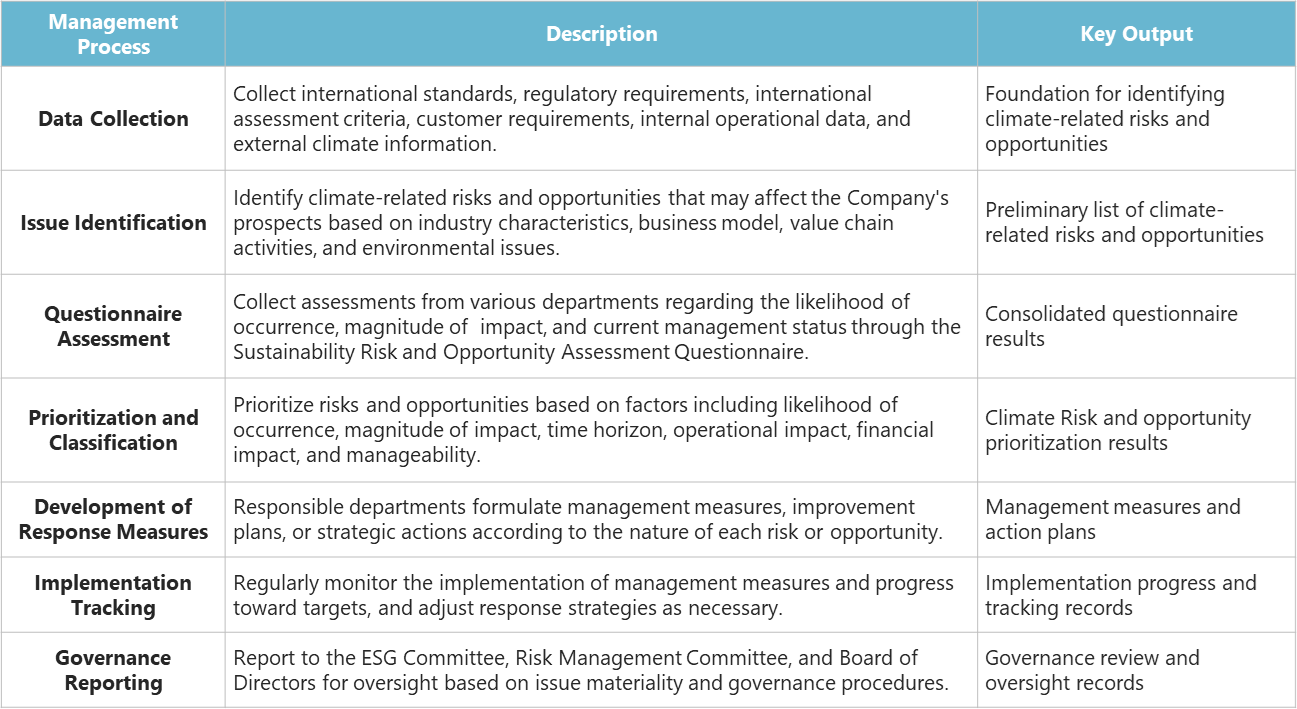
The Company's climate risk and opportunity management process consists of data collection, issue identification, questionnaire-based assessment, prioritization and classification, development of response measures, implementation tracking, and governance reporting. Through this process, the Company is able to assess the potential impacts of climate-related risks and opportunities on its operations, value chain, financial planning, and strategic objectives, and to develop appropriate management measures accordingly.
Sources for Identifying Climate-Related Risks and Opportunities
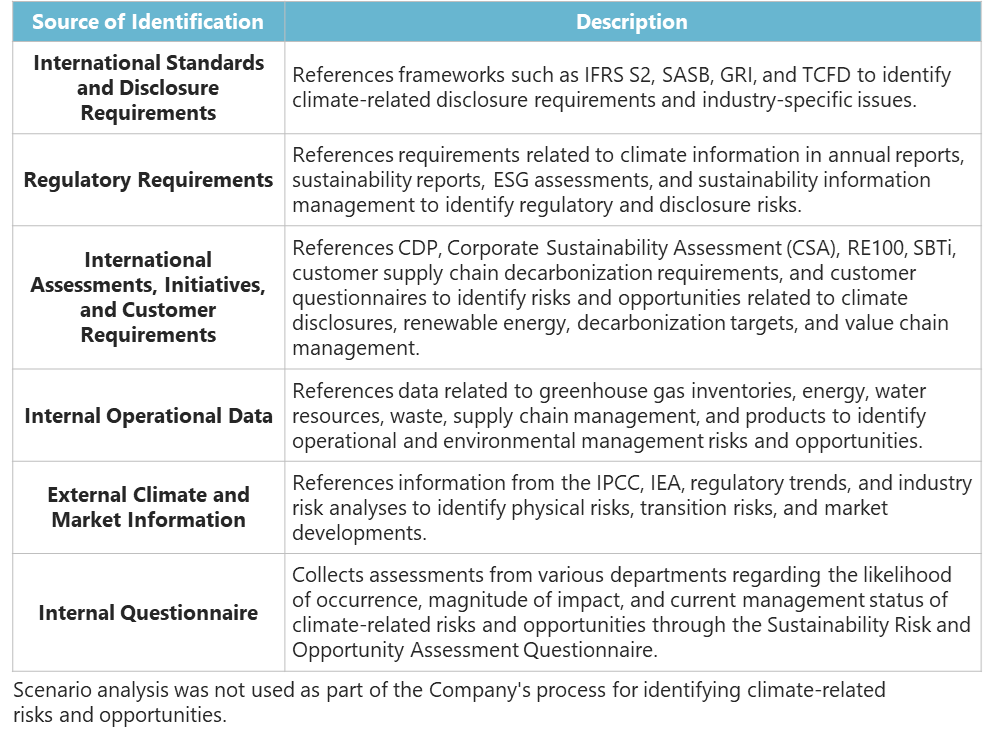
The Company identifies climate-related risks and opportunities using multiple sources of information. The assessment covers all entities within the consolidated financial reporting boundary as well as upstream and downstream activities across the value chain. The identification process draws upon internationally recognized standards, regulatory requirements, international assessments and initiatives, customer supply chain decarbonization requirements, internal operational data, external climate information, and questionnaire internal results. The primary sources are summarized below.
Assessment and Prioritization of Climate-Related Risks and Opportunities
The assessment of climate-related risks and opportunities primarily considers the likelihood of occurrence and magnitude of impact, supplemented by factors including time horizon, operational impact, financial impact, value chain impact, and manageability. Through questionnaires and the consolidation of internal data, the Company evaluates the relative significance of each risk and opportunity, providing a basis for subsequent strategic planning, resource allocation, financial impact assessment, and the monitoring of management actions.
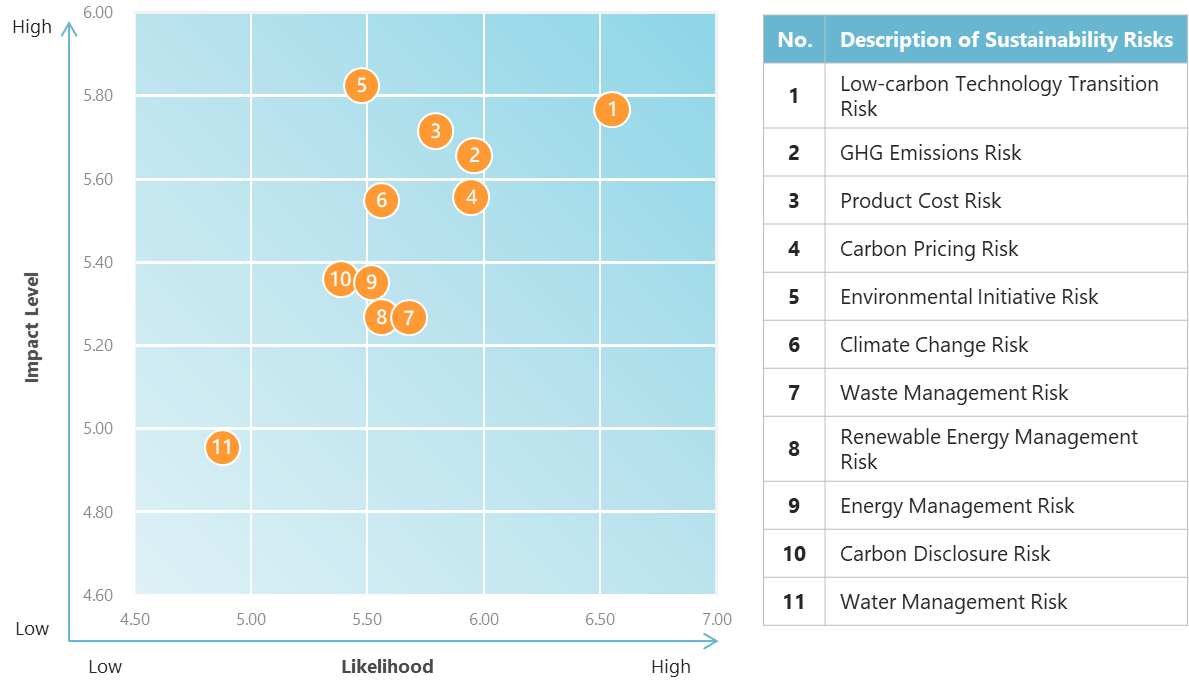
During the reporting year, the assessment was primarily based on two dimensions: “Likelihood of Occurrence” and “Magnitude of Impact”. Likelihood of occurrence evaluates the probability that a risk or opportunity will arise or continue to have an impact over the short, medium, or long term. Magnitude of impact assesses the potential effects on operations, financial performance, reputation, regulatory compliance, customer relationships, the value chain, and strategic objectives. The assessment results are presented in a matrix format to facilitate the identification of high-priority management issues.
■ Climate Risk Matrix
The Climate Risk Matrix uses “Likelihood of Occurrence” and “Magnitude of Impact” as the primary axes to evaluate the relative priority of climate-related risks. Risks located in the high-likelihood/high-impact quadrant are designated as priority management issues, for which responsible departments develop response measures and monitor implementation effectiveness.
■ Climate Opportunity Matrix
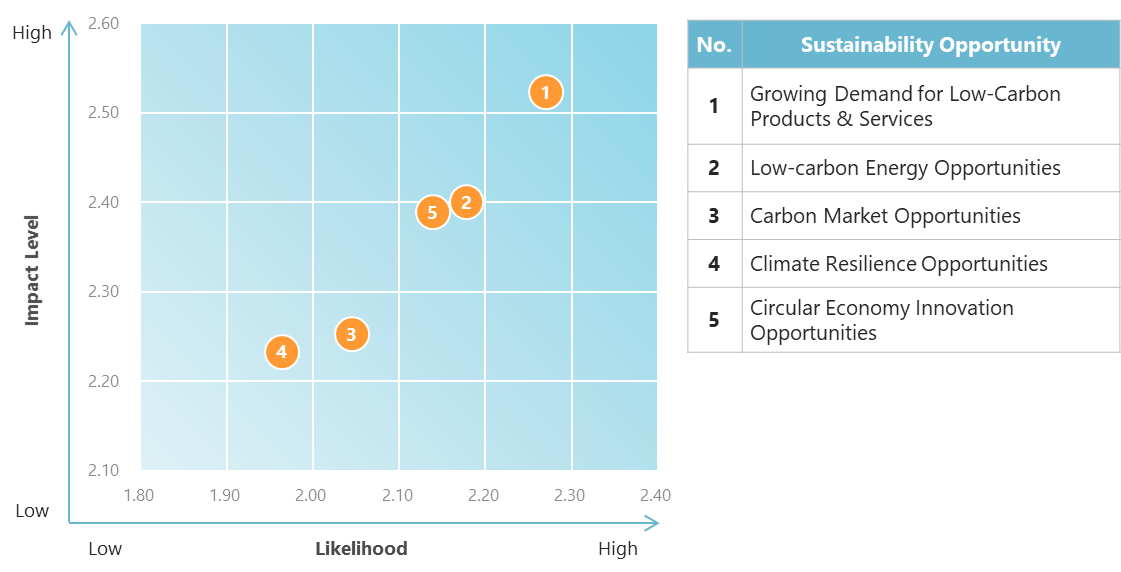
The Climate Opportunity Matrix likewise uses “Likelihood of Occurrence” and “Magnitude of Impact” as the primary axes to evaluate the potential contributions of climate-related opportunities to the Company's strategy, products, customer collaboration, revenue resilience, and value chain management. Opportunities located in the high-likelihood/high-impact quadrant serve as key references for strategic initiatives, resource allocation, and market development.
th leading international
Climate Resilience and Scenario Analysis
Based on the results of the climate-related risk and opportunity assessment matrix, and taking into consideration the nature of the climate-related risks and opportunities, financial effects, strategic relevance, and data availability, the Company selected the following climate-related matters for further disclosure. These matters are considered the most relevant for illustrating the Company's climate-related financial effects and corresponding management actions during the reporting period. Other identified climate-related risks and opportunities continue to be monitored by the responsible management units. Management priorities are continuously reviewed and updated in response to changes in the external environment, regulatory developments, customer requirements, actual events, and the results of the annual assessment.
Transition Risk | GHG Emissions Management and Rising Carbon-related Costs
Although Low-carbon Technology Transition Risk ranked highest in the climate risk assessment matrix, the GHG Emissions Management and Rising Carbon-related Costs risk was selected as the representative transition risk because it is directly associated with carbon fees and carbon pricing, renewable electricity procurement, comply with targets set under the SBTi, and customer decarbonization requirements. In addition, identifiable expenditures related to this risk were incurred during the reporting period.
Physical Risk | Extreme Weather Events and Long-term Climate Change
This risk was selected as the representative physical risk because it reflects both acute and chronic physical climate impacts that may affect facility safety, infrastructure, and business continuity. During the reporting period, the Company incurred identifiable expenditures related to infrastructure improvements, equipment maintenance, and repair activities.
Climate Opportunity | Growing Demand for Low-carbon Products and Services
This opportunity received the highest ratings for both likelihood of occurrence and potential impact in the Company's climate-related opportunity assessment. It is also reflected in increased revenue from green products, investment in low-carbon product development, product certification, and product carbon information management. Accordingly, this matter was selected for further disclosure as the Company's representative climate-related opportunity.
Climate-Related Risk and Opportunity Response and Monitoring
Based on the results of the identification and prioritization process, the Company develops corresponding management measures for each identified risk and opportunity. Transition risks are primarily managed through the Company's decarbonization pathway, greenhouse gas (GHG) inventories and third-party verification, carbon cost assessment, renewable energy procurement, energy efficiency improvements, responses to customer requests for carbon information, and systematic data management. Physical risks are addressed through site adaptation, infrastructure improvements, backup systems, and business continuity management to reduce potential impacts. Climate-related opportunities are pursued through low-carbon product design, environmental labels, product carbon information management, and responses to customer requirements.
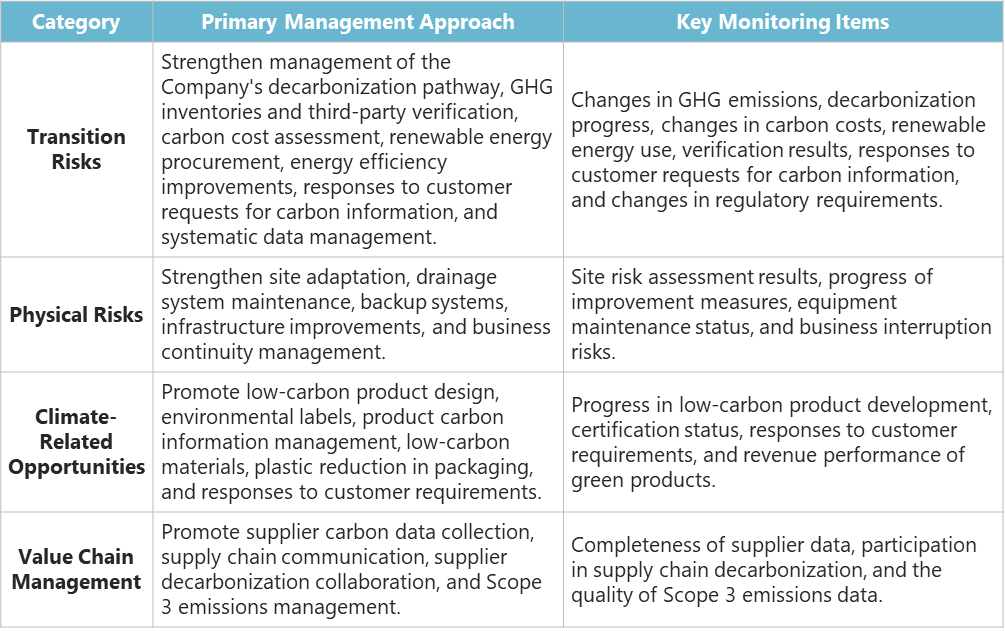
Each responsible department monitors the implementation of the relevant management measures and reports significant implementation progress, exceptional circumstances, or matters requiring cross-functional coordination to the appropriate management and governance bodies in accordance with the Company's governance procedures. The management of material climate-related risks and opportunities also serves as an important reference for subsequent strategic adjustments, resource allocation, and financial impact assessments.
Integration with Enterprise Risk Management
Climate-related risks and opportunities are not managed separately from the Company's enterprise risk management (ERM) framework. Instead, they are progressively integrated into the ERM process through collaboration among the ESG Office, the Risk Management Office, management units, and functional teams. Climate-related risks and opportunities that are assessed as material or may affect the Company's medium- to long-term operations, financial performance, or strategic objectives are incorporated into the overall ERM framework in accordance with the Company's risk management mechanism. Depending on the nature of the issue, they are reported to the Risk Management Committee, the Sustainability Committee, and the Board of Directors for oversight.
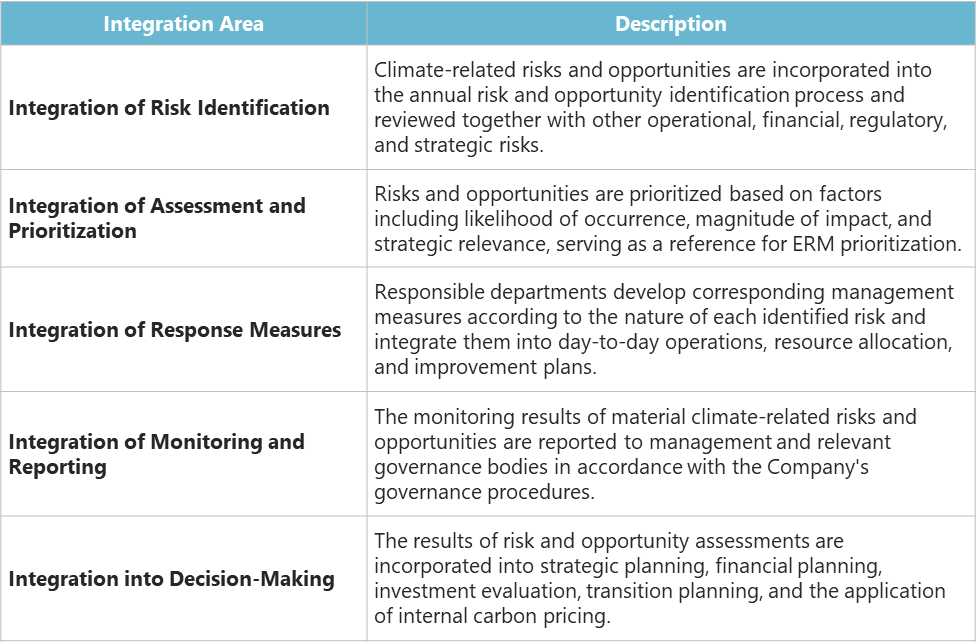
Through integration with the enterprise risk management (ERM) process, the Company is able to more comprehensively understand the impacts of climate-related risks and opportunities on its operations, value chain, and financial planning, while strengthening cross-functional collaboration, governance oversight, and long-term resilience.
- For Metrics and Targets, Please refer to Greenhouse Gas Management and Decarbonization
Green Finance and Responsible Sustainable Investment
1. Strengthening Climate and Capital Governance Through International Sustainability Frameworks
Compal aligns with leading international sustainability frameworks and adopts “low-carbon transition” and “sustainable finance” as core drivers of its sustainability strategy.The Company enhances energy efficiency and expands the use of renewable energy to reduce operational emissions, while allocating capital prudently and responsibly to projects that generate positive environmental and social outcomes. This dual-axis strategy strengthens the systematic and transparent management of sustainability issues, and enhances Compal’s long-term resilience and value-creation capacity amid the global net-zero transition trend.
2. Green Energy Adoption at the Pingzhen Plants
In 2025, Compal introduced renewable energy at the Pingzhen Plant for the first time, beginning green electricity consumption in July. A total of 198,000 kWh was consumed during the year, supported by T-REC renewable energy certificates.This initiative directly reduces Scope 2 emissions, achieving an annual reduction of approximately 98.01 tCO₂e.
3. Sustainable Finance Impact — Investment in a Social Bond
In 2025, Compal invested in sustainability-related financial bonds. The investments are as follows:
⊙ Taiwan Cooperative Bank 2021 2nd Unsecured Senior Financial Bond (Bond Code: G12441)
Compal invested NT$10 million in this bond. The bond is recognized by the Taipei Exchange (TPEx) as a Social Bond, with proceeds allocated to projects that generate social benefits, including affordable housing financing and support for small and medium-sized enterprises (SMEs) in financial relief and business development.