Green factories Management
Energy Management Policy and Commitment
Energy governance has evolved beyond simple cost control to encompass climate risk management, operational resilience, and financial materiality. Through systematic management and data-driven monitoring, Compal advances energy efficiency improvements and energy transition pathways while deeply embedding energy-related considerations into operational decision-making.
The Company's energy management policy is centered on enhancing energy productivity and advancing the energy transition. Compal has officially joined the RE100 initiative, committing to achieving 100% renewable electricity usage across all sites by 2050, while aligning its transition pathway with its Science Based Targets (SBT). Relevant decisions are linked to energy choices and carbon costs through the Internal Carbon Pricing (ICP) mechanism, ensuring that capital expenditures support a low-carbon and resilient future. Governance oversight is provided by the Board-level Sustainability Committee, which monitors performance and incorporates energy-related indicators into management performance evaluations.
Environmental Performance Management Targets
Compal has established 2019 as the baseline year for its environmental performance. In the baseline year, its operating sites had already established a certain level of management practices for energy, water resources, and waste. Compal has continued to enhance its environmental management performance through measures such as energy-efficient equipment upgrades, process water management, resource circulation, the implementation of the ISO 50001 Energy Management System, and UL 2799 Zero Waste to Landfill certification.Building on these existing improvement efforts, Compal has further set annual reduction targets for water consumption, electricity consumption, and waste generation, with each indicator targeted to achieve a cumulative reduction of one percentage point per year from the 2019 baseline. Based on this reduction pathway, the 2025 target is to reduce the absolute total amount of each of these three environmental performance indicators by 6% compared with the 2019 baseline. Corresponding annual absolute targets are calculated accordingly to track actual performance and progress.
■2025 Energy-saving Achievements
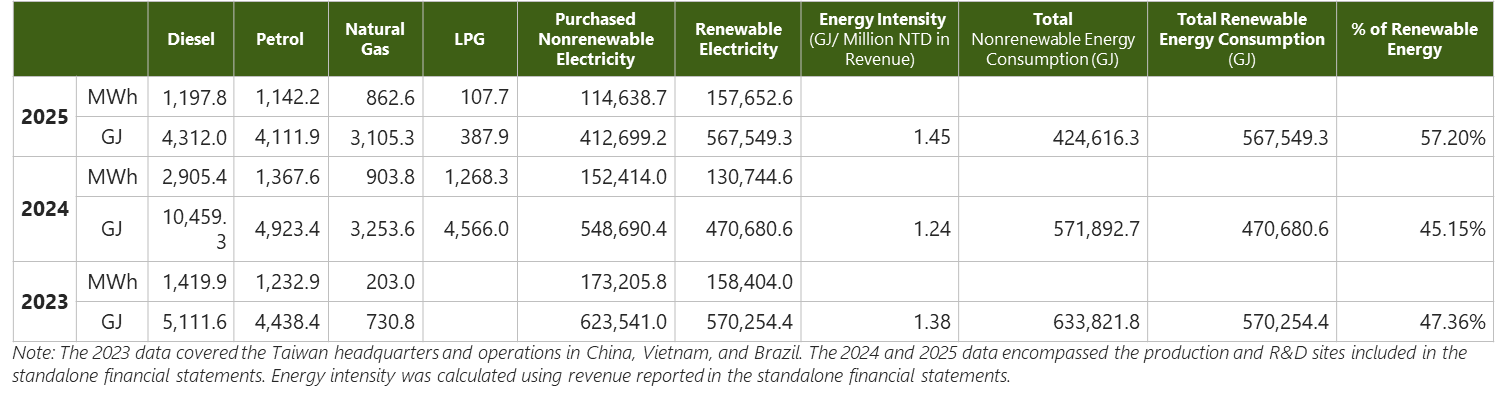
- Renewable energy consumption reached 567,549.35 GJ in 2025, accounting for 57.2% of total energy consumption, demonstrating Compal’s continued efforts to optimize its energy mix and reduce dependence on non-renewable energy source. Energy intensity was 1.45 GJ/million in revenue, supported by energy monitoring, equipment efficiency improvements, and renewable energy procurement to advance low-carbon operations.
- External Recognition:CIC and CIT have been awarded the Suzhou Green Factory certification, recognizing their achievements in energy conservation, carbon reduction, and green manufacturing management.
Energy Management Mechanism
To ensure the achievement of its energy-saving targets, the Company has established an energy management mechanism to continuously improve energy efficiency and operational stability through energy-use reviews, equipment efficiency assessments, digital monitoring, and investments in energy-efficient equipment.
⊙ Energy Review and Monitoring: Regularly review energy consumption and equipment operating efficiency across operating sites, and develop equipment improvement, replacement, and process optimization plans based on assessment results.
⊙ Employee Engagement and Incentives: Regularly provide education, training, and awareness programs on energy management, energy-saving measures, and equipment operation to enhance employees’ energy conservation awareness and encourage participation in improvement initiatives across departments.
⊙ Supply Chain Collaboration: Collaborate with suppliers to promote high-efficiency equipment, energy-saving technologies, and low-carbon processes. Through equipment improvements and technical exchanges, Compal works with suppliers to reduce energy consumption and carbon emissions across the value chain.
⊙ Technological Innovation and Equipment Upgrades: Continuously assess the application of high-efficiency equipment, energy management systems, and digital monitoring technologies, incorporating energy-saving benefits, equipment reliability, and investment returns into the evaluation of improvement initiatives.
Energy Intensity and Analysis of Variations
In 2025, the Company's energy intensity was 1.45 GJ/million in revenue. The increase in energy intensity compared with the previous year was primarily attributable to changes in revenue structure and, more significantly, the expansion of the inventory boundary to include all operational sites disclosed in the parent-company-only financial statements. As a result, the data coverage became more comprehensive and does not indicate a deterioration in energy-use efficiency. Going forward, the Company will continue to reduce energy consumption per unit of output through process optimization and the enhancement of its monitoring systems.
- Management Actions, Performance, and Financial Linkages: The Company's strategy focuses on replacing equipment with high-efficiency alternatives and implementing intelligent monitoring systems. Energy-saving projects executed in 2025 included energy optimization initiatives for AI server production lines and variable-frequency upgrades to HVAC systems. The cumulative benefits of these projects were directly reflected in improved energy consumption performance per unit of product. Energy performance has also been closely integrated with the Company's operating cost structure and procurement strategy. Short-term fluctuations in the proportion of renewable energy were primarily attributable to limited renewable electricity supply in certain regional markets and rising procurement costs. Going forward, Compal will strengthen portfolio resilience through diversified Power Purchase Agreements (PPAs) and other renewable energy procurement mechanisms to ensure that progress remains aligned with its transition pathway.
- Value Chain Energy Management: The scope of energy management extends throughout the product lifecycle (Scope 3). Upstream, Compal supports supply chain partners in improving carbon management maturity through the CDP Supply Chain Program. Downstream, the Company incorporates energy-efficient design principles, including compliance with standards such as ENERGY STAR, to identify and maximize carbon reduction opportunities during the product use phase.

Water-Efficient Operations
The Company continues to enhance employees’ awareness of water conservation and efficient water use through environmental management training, internal awareness campaigns, and water-saving initiatives at its operating sites. These efforts cover water conservation targets, daily water-saving practices, inspections of water-using equipment, reporting of abnormal water leakage, and improvements in process water use, while encouraging employees to actively participate in water conservation initiatives.In addition, the Company continues to replace conventional faucets with water-efficient models and evaluates and plans rainwater harvesting facilities based on the water-use conditions of each operating site, with the aim of reducing municipal water consumption and improving water-use efficiency. At applicable sites, rainwater harvesting systems are planned for implementation, with collected rainwater to be used for landscape irrigation, cleaning, and other non-process purposes.
Water Resource Management
Against the backdrop of climate change-driven extreme weather events and the increasingly uneven distribution of global water resources, securing a stable water supply has become a critical factor in maintaining operational continuity and fulfilling environmental responsibilities. Given the nature of the electronics assembly industry, which does not involve process water consumption, the Company's water use is primarily concentrated in employee domestic use and the operation of general facilities such as cooling towers and air-conditioning systems. Although water resources were not identified as a highest-priority material topic through the materiality assessment process due to their relatively limited direct environmental impact, nearly half of the Company's production capacity is located within watersheds experiencing extremely high water stress. In addition, key customers are imposing increasingly stringent requirements regarding water risk disclosure across the value chain. Accordingly, the Company's management approach adopts a multidimensional framework of “Watershed Perspective × Regional Resilience × Supply Chain Collaboration,” recognizing water resources as an integral component of operational resilience management.
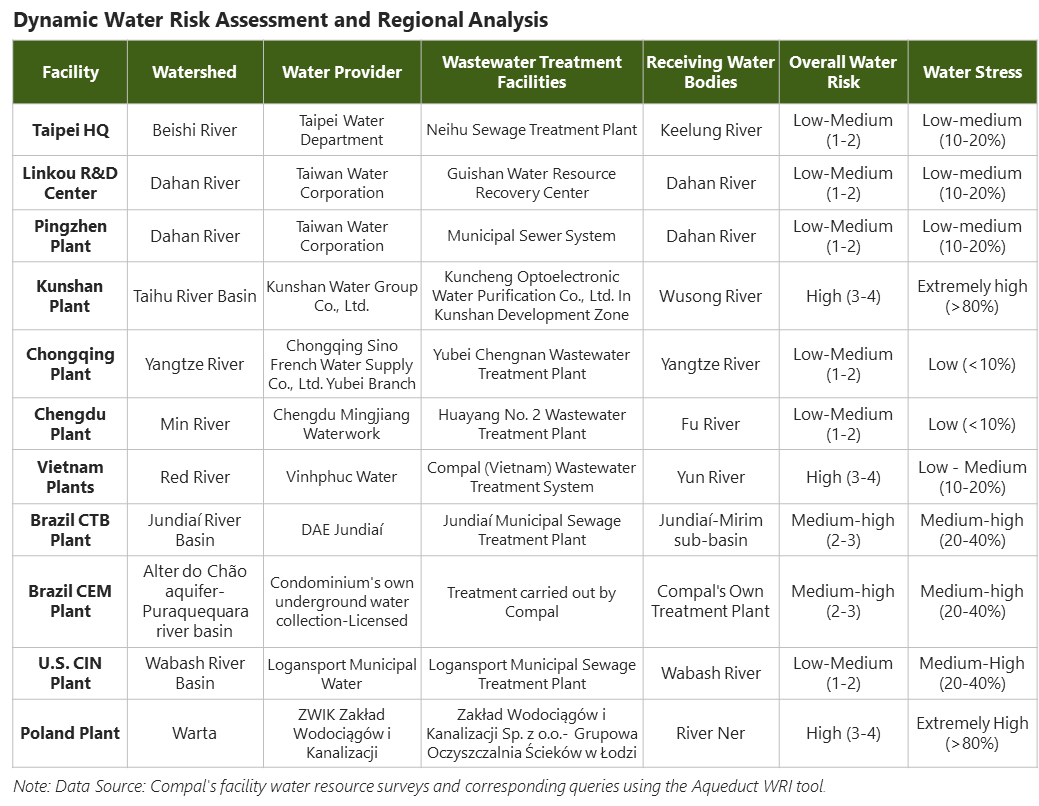
■Dynamic Water Risk Assessment and Regional Analysis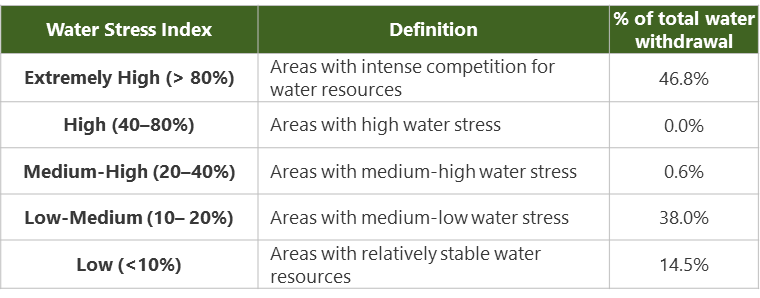
The Company utilizes the WRI Aqueduct international water risk assessment tool to evaluate all global operational sites using two indicators: Water Stress and Overall Water Risk.
- Identification and Concentration of Extremely High-Risk Areas: Analysis conducted in 2025 indicated that 46.8% of total water withdrawal occurred in areas classified as experiencing Extremely High Water Stress (>80%), with major facilities located in Kunshan and China. These regions face significant risks associated with water withdrawal restrictions and supply fluctuations due to factors such as intensive urbanization, increasing pressure on infrastructure, changing precipitation patterns, and increasingly stringent environmental regulations.
- Multi-Dimensional Risk Classification and Response: Although the Vietnam plants exhibit a relatively lower water stress index, its overall water risk is nevertheless classified as High due to local infrastructure conditions and climate-related factors. For such high-risk locations, the Company has established a priority management list and implemented assessments of alternative measures, including backup water supply solutions, rainwater harvesting technologies, and alternative water source feasibility studies. These measures are intended to mitigate the operational impacts of regional water shortages.
Water Resource Management Strategy and Roadmap
With a core focus on “Watershed Perspective × Prioritization of High Water-Risk Areas × Supply Chain Collaboration,” the Company has established a tiered water resource management strategy. The management scope extends beyond on-site water use to encompass regional watersheds, with strategic emphasis on improving resource utilization efficiency and expanding management boundaries from facility-level operations to watershed-level coexistence, thereby ensuring that water resource allocation aligns with the principles of equity and efficiency.
Effluent Compliance and Receiving Water Body Protection: The Company has established a dual mechanism of “Regulatory Compliance × Preventive Management.” All wastewater discharges from operational sites are directed to municipal wastewater treatment systems or qualified centralized treatment facilities, ensuring that effluent quality exceeds local regulatory discharge standards. For sites equipped with in-house wastewater treatment systems, rigorous water quality monitoring is conducted to minimize potential impacts on receiving water bodies.
Site-Specific Technology Deployment and Water Conservation Achievements:
- Vietnam Plants: Rainwater harvesting systems and reverse osmosis wastewater recycling facilities have been installed. Treated water is reused for landscape irrigation. The adoption of these alternative water sources has effectively reduced dependence on municipal water supplies.
- Brazil Plants : In response to local water supply conditions, the Company has legally obtained groundwater extraction permits and established dedicated water treatment and monitoring systems to ensure that water withdrawal volumes and water quality comply with local environmental management requirements.
- Taipei Headquarters: The Company promotes watershed-friendly practices by exclusively using environmentally certified biodegradable cleaning products. This approach reduces pollution loads in domestic wastewater at the source and minimizes ecological impacts on surrounding rivers.
Value Chain Collaborative Management: The Company is currently planning to introduce a “Watershed Collaborative Management” approach to assess the cumulative impacts of water use by operational sites and key suppliers located within the same watershed. Through its supplier management platform, the Company promotes transparency in water-use information and strengthens the supply chain's resilience to water-related risks and crises.
Water Use Efficiency Performance and Data Resilience Analysis
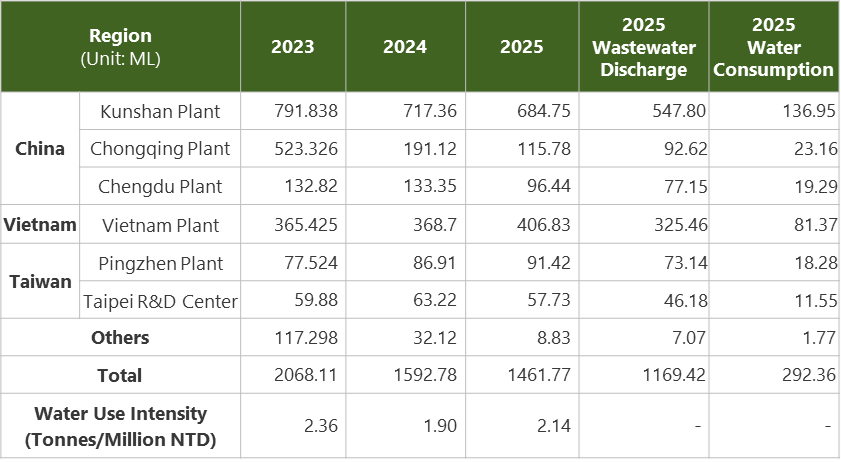
Total water withdrawal in 2025 amounted to 1,461.77 million liters, continuing a year-over-year downward trend since 2023, demonstrating the effectiveness of water conservation technologies and data governance mechanisms.
- Analysis of Intensity Indicators and Boundary Effects: Water use intensity in 2025 was 2.14 tons /million in revenue). The increase compared to the previous year was attributable not only to changes in the revenue mix but primarily to the expansion of the reporting boundary to include all operational sites disclosed in the parent-company-only financial statements, including multiple R&D, office, and warehouse facilities. As a result, the scope of data coverage became more comprehensive. Although the intensity indicator fluctuated due to boundary effects, the continued decline in total water withdrawal demonstrates that management initiatives have achieved tangible improvements in resource consumption efficiency.
- Dynamic Adjustment of Target Management: The Company has adjusted its management approach to emphasize long-term trend improvement. Through its digital management platform, abnormal data alerts are generated to ensure that management measures can be flexibly adjusted in response to changes in operational scale.
- Water Balance and Consumption Monitoring: In 2025, total wastewater discharge amounted to 1,169.42 million liters, while total water consumption was 292.36 million liters. Through effective water flow management, the Company strives to maximize the efficiency of every unit of water used. Water consumption data also serve as an important basis for evaluating Scope 3 greenhouse gas emissions.

WASH Practices and Social Responsibility
The Company implements the principles of WASH (Water, Sanitation and Hygiene) in alignment with United Nations Sustainable Development Goal (SDG) 6, ensuring that all operational sites provide safe and reliable sanitation and drinking water facilities. All operational locations are equipped with water supply facilities and handwashing stations that comply with hygiene standards, safeguarding employees’ fundamental rights to water access and demonstrating the Company’s commitment to worker health, human rights, and responsible workplace management.
Air Pollutant Management Practices
The Company's operations are not classified as a highly polluting industry. Air emissions primarily arise from volatile organic compounds (VOCs) generated through the evaporation of organic solvents used in production-line cleaning and equipment maintenance, as well as trace amounts of fumes generated during soldering processes. Due to the nature of its manufacturing processes, emissions of nitrogen oxides (NOx) and sulfur oxides (SOx) are relatively limited; therefore, management efforts are primarily focused on the reduction of VOC emissions.
- Dual-Track Management Strategy: The Company adopts a dual-track management approach of “Source Control × End-of-Pipe Treatment.” At the source, a controlled issuance system for organic solvents is implemented to accurately manage consumption and minimize evaporation losses. For end-of-pipe treatment, activated carbon adsorption systems have been installed at major manufacturing facilities in China and Vietnam to effectively remove pollutants from exhaust gases.
- Equipment Maintenance and Regulatory Compliance: Maintenance teams conduct monthly inspections and preventive maintenance of pollution control equipment to ensure stable system performance. All operational sites have obtained the required air emission permits in accordance with applicable regulations and conduct periodic air pollutant monitoring to ensure emissions remain below local regulatory limits.
- Expansion of Management Scope: The Company initiated a VOC inventory management program in 2021 and expanded the inventory boundary in 2024 to include overseas facilities such as those in Vietnam. These efforts continue to enhance the completeness and transparency of global air pollution management data.
Emission Performance Analysis and Reduction Pathway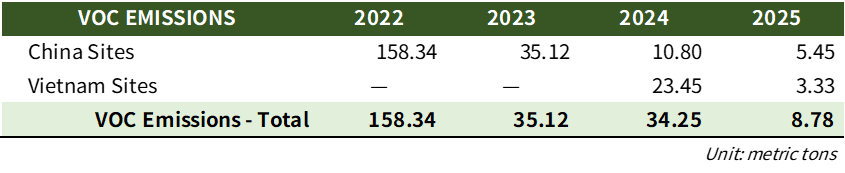
Total VOC emissions in 2025 declined significantly to 8.78 metric tons, demonstrating the effectiveness of the Company’s enhanced management initiatives.
- Historical Performance and Regional Results: Compared with the 2022 baseline year and 2024 levels, total emissions have declined significantly. In 2025, the disaggregated data indicate that emissions from the China plants totaled 5.45 metric tons, while the Vietnam plants recorded 3.33 metric tons, with all regions achieving their structural emissions reduction targets.
- Medium- and Long-Term Reduction Roadmap: Using 2022 as the baseline year, the Company established clear reduction milestones. Short-term target (2025): Total VOC emissions not exceeding 118.72 metric tons (achieved); Medium-term target (2030): Reduce emissions by 50% from the baseline year, maintaining total emissions below 79.17 metric tons.
- Performance Integration and Decision Support: Emission reduction performance has been incorporated into environmental performance indicators for operational sites and is implemented in parallel with the Company's broader climate transition and decarbonization strategies. Going forward, the Company will continue to improve the accuracy and completeness of emissions data to support equipment investment decisions and process optimization initiatives.
Perfluorocarbon (PFC) Emissions Management
The Company’s manufacturing processes do not utilize process gases primarily composed of perfluorocarbons (PFCs). Based on a comprehensive assessment, potential PFC emissions are primarily associated with leakage from fire suppression system equipment.
- Quantification and Data Enhancement: PFC emissions have been included within the Company’s greenhouse gas inventory boundary. Based on existing equipment configurations and usage scenarios, current PFC emissions are considered minimal or near zero. Beginning in 2025, the Company formally adopted a leakage-based quantification methodology and established a comprehensive data foundation through its digital monitoring platform to progressively improve data coverage and accuracy. Detailed calculation methodologies and quantification results are disclosed in Chapter 4 – Climate Action.
- Risk Prevention and Alternative Evaluation: The Company’s management strategy focuses on engaging qualified maintenance contractors to improve gas recovery rates and reduce leakage risks. At the same time, research into alternative fire suppression solutions is actively underway. The Company is evaluating extinguishing agents with lower Global Warming Potential (GWP) to reduce long-term environmental emission risks at the source.
- Integration with Climate Transition Strategy: Looking ahead,, PFC management will remain integrated into the Company's overall greenhouse gas management strategy and climate transition pathway to ensure that the management of non-CO₂ greenhouse gases remains aligned with the Company's net-zero objectives.
Waste Management and Resource Circularity
Against the backdrop of increasing global resource constraints and tightening environmental regulations, waste management has evolved from a traditional end-of-pipe disposal approach to a model centered on source reduction and resource circularity. The Company's management framework utilizes the Compal Cloud for Sustainability as its core data governance platform, integrating waste classification, tracking, and treatment information across all sites to ensure a high level of traceability and data consistency throughout the waste lifecycle. Through a closed-loop process encompassing source reduction → waste segregation and management → resource recovery → optimization of final disposal, the Company continuously enhances resource utilization efficiency and minimizes the potential environmental impacts of its operations.
■Issue Identification and Management Boundary
Waste management involves resource consumption, landfill burdens associated with final disposal, emissions from incineration, and environmental risks arising from improper handling and disposal.
- Identification of Physical Impacts: The Company identifies potential risks of soil and water contamination associated with operational activities and incorporates these considerations into its overall environmental management decision-making process.
- Management Scope and Value Chain Extension: The management boundary covers all operational sites within the consolidated financial reporting scope and extends to the impacts associated with transportation and waste treatment processes. Waste-related data are also utilized in the assessment of Scope 3 greenhouse gas emissions (Category 5: Waste Generated in Operations), strengthening the Company's value-chain carbon management capabilities.
- Financial and Compliance Linkage: Waste treatment costs and evolving regulatory requirements are incorporated into operational risk assessments to address the potential impacts of disposal resource constraints on operating costs. At present, related data are primarily used for internal decision-making purposes, while data quality continues to be enhanced to support more comprehensive disclosures in the future.
■ Waste Generation Structure and Physical Characteristics
The volume of waste generated is influenced by the scale of operations and the degree of process optimization.
- Non-Hazardous Waste: Non-hazardous waste primarily arises from daily operations, office activities, and facility maintenance, constituting the majority of total waste generation.
- Hazardous Industrial Waste: Although hazardous industrial waste accounts for a relatively small proportion of total waste generated, it presents higher environmental risks. Such waste is primarily generated from electronics assembly and surface-mount technology (SMT) processes and includes PCB scrap and offcuts, organic solvents, chemical-contaminated wiping cloths, cleaning agents, waste batteries, used solvent containers, waste fluorescent lamps and lighting tubes, and other hazardous process-related materials.
■ Waste Reduction Initiatives and UL 2799 Certification Benchmark
The Company adopts differentiated management strategies based on waste characteristics, with the objective of minimizing final disposal requirements while maximizing resource value.
- Risk-Oriented Management Strategy: For hazardous waste generated from SMT (Surface Mount Technology) processes, the Company has established rigorous procedures covering waste classification, storage, and transportation. Considering the potential for metal recovery and solvent regeneration, recycling and reuse mechanisms are prioritized wherever feasible, provided that appropriate risk control measures are in place.
- Zero Waste to Landfill (ZWTL) Practices: The Company uses UL 2799 certification as a key management benchmark for waste circularity performance. In 2025, the Kunshan Plant achieved UL 2799 Platinum Certification, while two facilities in Vietnam obtained Gold Certification. The resource recovery data verified through the certification process significantly enhance data reliability and serve as an important basis for evaluating circular economy performance.
- Disposal Monitoring and Compliance: Waste disposal activities are entrusted exclusively to legally qualified treatment providers, with final treatment destinations explicitly specified in contractual agreements. The Company currently does not engage in any cross-border waste transfers. All waste management activities are conducted within legally authorized local systems, thereby avoiding environmental risks associated with transboundary transportation.
■ Treatment Performance and Waste Flow Trend Analysis
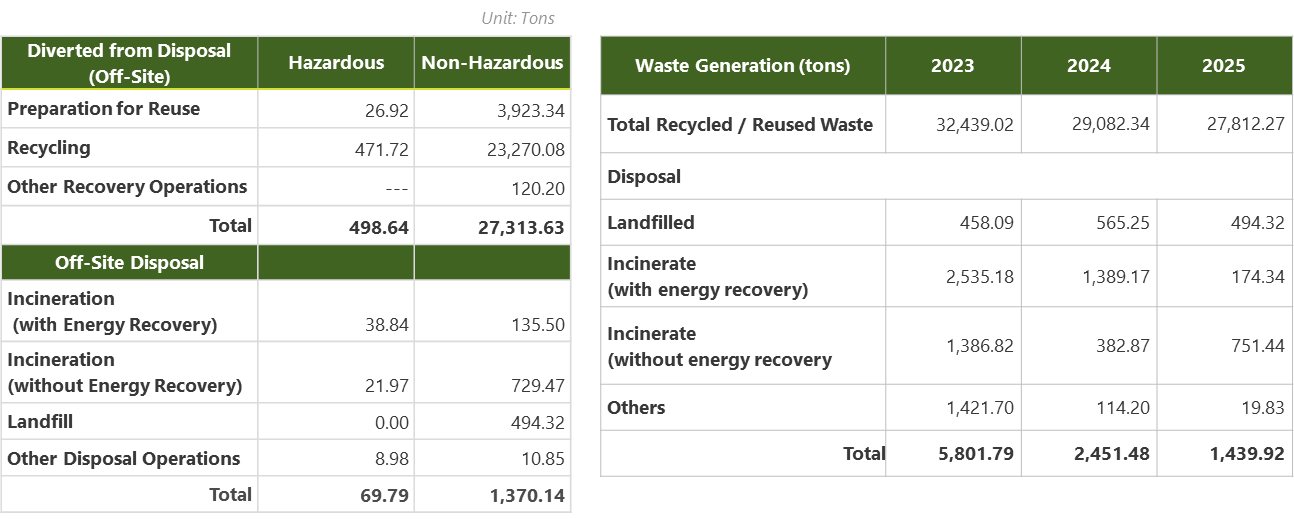
Compal's waste management principle is “Resource Recovery First, Final Disposal Last.” Waste generated is categorized into “Diverted from Disposal” and “Off-Site Disposal” based on its actual treatment method after leaving the facility.
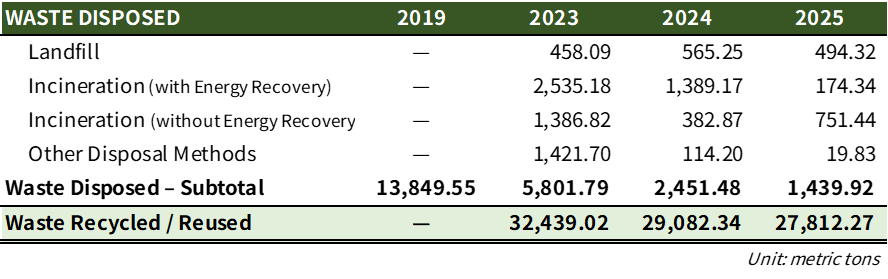
- Extremely Low Landfill Rate Performance: In 2025, the overall landfill rate was maintained at 1.69%. Only 494.32 tons of non-hazardous waste were landfilled during the year, while hazardous waste continued to achieve zero landfill disposal. Waste was primarily managed through recycling and recovery, incineration, and other treatment methods, demonstrating the Company's continued efforts to reduce the proportion of waste requiring final landfill disposal.
- Resource Recovery Performance: Total waste diverted from disposal in 2025 amounted to 27,812.27 tons. The data indicates that waste diverted from disposal
remained the primary waste management pathway at Compal. Through waste segregation, recycling programs, and the tracking of outsourced treatment flows, the Company continues to enhance resource recovery and circular resource utilization.
- Waste Reduction Trends and Improved Classification: The amount of waste directly disposed of declined from 5,801.79 tons in 2023 to 1,439.92 tons in 2025, demonstrating the tangible effectiveness of source reduction initiatives and process improvements. To improving data consistency and align with the “Second Edition of the Reference Guidelines for Sustainable Economic Activities”, the Company revised its waste classification methodology during the reporting year by incorporating reuse activities into the recycling category.
Compal continuously ensures that its operations comply with applicable environmental laws and regulations through regulatory identification, internal audits, and corrective action tracking. No significant violations of environmental laws or regulations occurred between 2021 and 2025.
SASB Waste Management Metrics
In accordance with the SASB Electronic Manufacturing Services (EMS) Industry Standard, the Company discloses specific information regarding the weight and recycling rate of hazardous waste generated from manufacturing processes to assess resource circularity performance and environmental compliance risks.
- Hazardous Waste Generated from Manufacturing Processes: In 2025, the total amount of hazardous waste generated from manufacturing processes was 507.7 tons. The primary sources of this waste were electronics assembly and SMT processes, including PCB scrap materials, waste solvents, chemical-contaminated wiping cloths, and other materials posing elevated environmental risks.
- Percentage of Manufacturing Hazardous Waste Recycled: Through the “Resource Recovery First” management strategy, the Company achieved a manufacturing hazardous waste recycling rate of 88.3% in 2025. This performance was made possible through stringent waste segregation practices and the use of qualified third-party recycling technologies, maximizing the value recovered from metals and regenerated solvents while ensuring that all recycling activities are conducted under appropriate environmental and safety controls.
Environmental Protection Expenditures
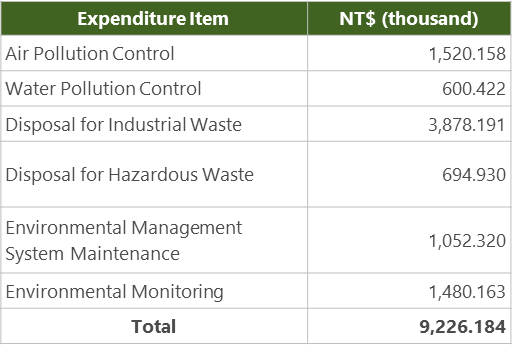
To continuously strengthen environmental protection and operational compliance capabilities, Compal continues to invest in pollution prevention and resource management initiatives. In 2025, total environmental protection expenditures (excluding routine maintenance and green product-related expenditures) amounted to NT$9,226 thousand.
Green Procurement
In alignment with the spirit of SDG 12 – Responsible Consumption and Production, Compal incorporates environmentally friendly principles into its procurement decision-making processes, giving priority to products certified with environmental labels, energy-efficiency labels, and FSC certification. The management framework focuses on two key dimensions: “Label-First” and “Circular Services.” Through supplier environmental assessments (GRI 308) and sustainable product evaluations, Compal seeks to reduce environmental impacts across the value chain from the source and ensure that resource procurement aligns with its environmental sustainability commitments.
In 2025, total green procurement expenditures amounted to NT$129,991 thousand, demonstrating the Company's tangible commitment to energy transition and resource efficiency. Green procurement primarily covered FSC-certified packaging materials, the leasing of office equipment bearing energy-efficiency labels, LED lighting replacement and upgrade projects, and Renewable Energy Certificates (T-RECs) supporting the development of renewable energy in Taiwan. Due to considerations of commercial confidentiality and competitive strategy, detailed transaction values and supplier contract information relating to individual green assets are disclosed on an aggregated basis. All data have been systematically compiled and reviewed to ensure the accuracy, quantifiability, and compliance of the disclosed information.
Compliance and Future Outlook
No significant environmental violations occurred at any operating site in 2025, demonstrating the effectiveness and robustness of the Company's environmental management system. Going forward, Compal will continue to strengthen environmental, health, and safety (EHS) monitoring and regulatory tracking mechanisms, while progressively expanding the implementation of energy conservation, emissions reduction, and pollution prevention measures. By integrating supply chain management and product lifecycle management initiatives, the Company will further advance responsible manufacturing practices and support the achievement of its net-zero transition objectives.