Materiality Analysis
Materiality Analysis
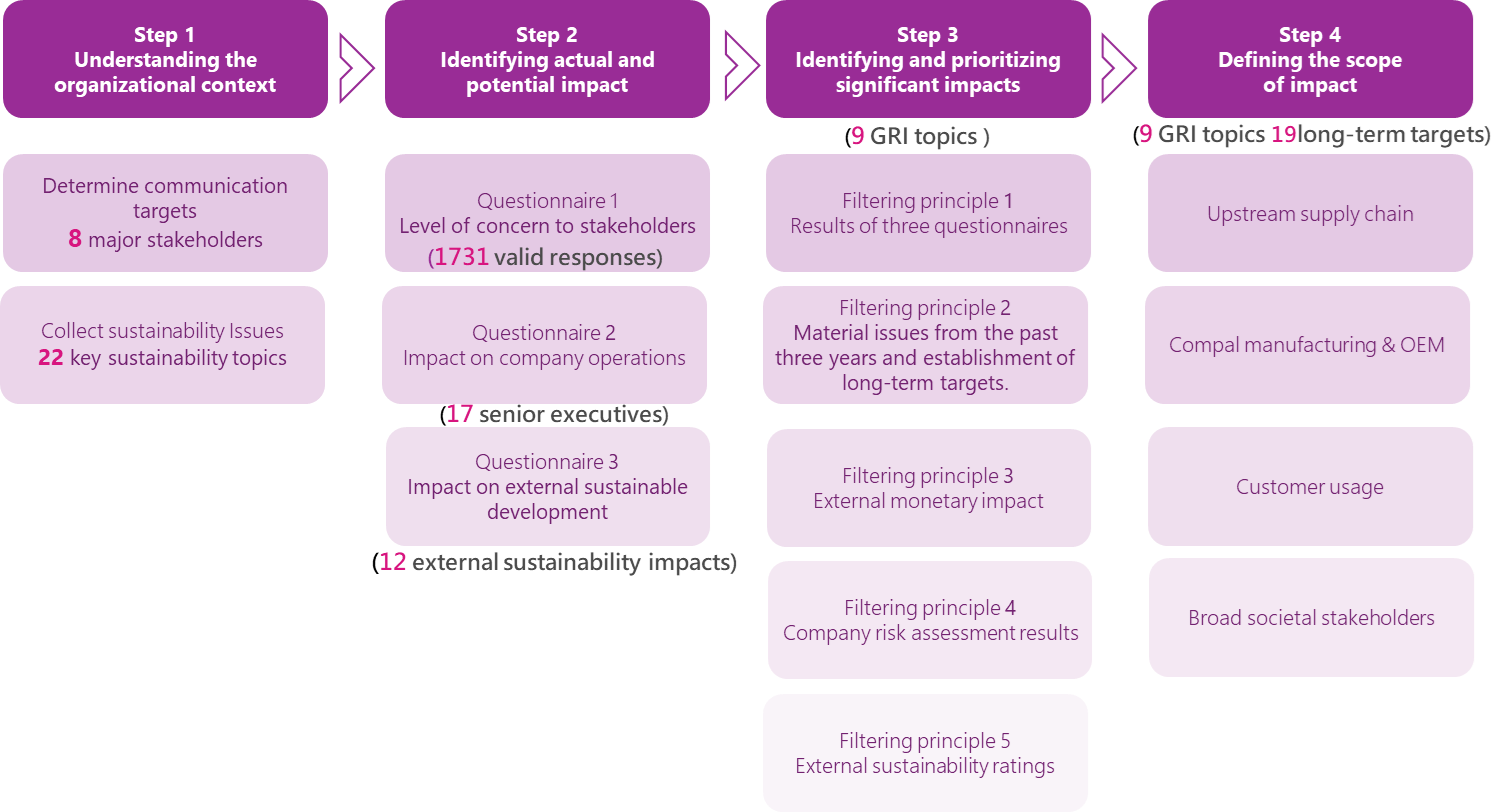
A materiality analysis is conducted by Compal every year, in accordance with the GRI Standards and the AA 1000 standards. This process includes four key stages: organizational context assessment, identification of actual and potential impacts, ranking of significant impacts, and definition of impact scope. Through this complete evaluation mechanism, we can effectively identify the Company's material sustainability topics and determine the scope of information disclosure.
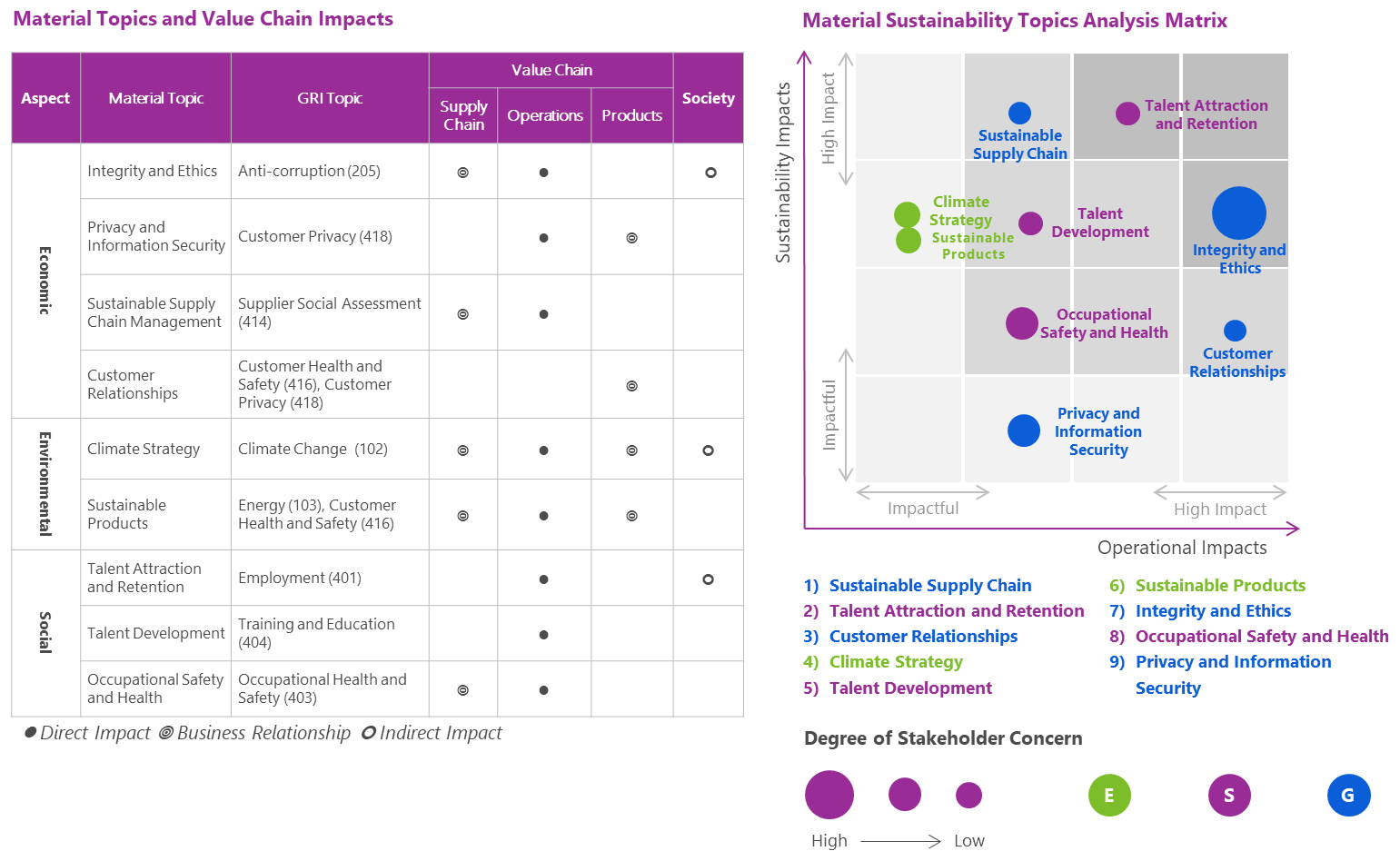
The Headquarters ultimately identified nine material sustainability topics for the 2025 ESG report and the basis for the setting of long-term targets including:
- Sustainable Supply Chain
- Talent Attraction and Retention
- Customer Relationships
- Climate Strategy
- Talent Development
- Sustainable Products
- Integrity and Ethics
- Occupational Safety and Health
- Privacy and Information Security
Compal's materiality analysis process was independently verified by SGS Taiwan Ltd. using the AA 1000 ASv3 standard to ensure its reliability and completeness.
Compal collects sustainability issues through multiple channel. Industry-specific sustainability topics with the potential for financial materiality through the TDCC IR Platform of the Taiwan Depository & Clearing Corporation (TDCC). International sustainability rankings including but not limited to S&P CSA (DJBCI), CDP, FTSES, Sustainalytics, and MSCI were also used as a reference. Internal analysis is conducted through regular or ad hoc sustainability meetings that combine the Company’s sustainability strategy and targets with stakeholder interactions. After referring to the practices of domestic and foreign peers, a total of 22 key sustainability topics were ultimately identified.
Materiality Analysis Steps
(The complete steps and procedures can be found on P33-36 of the Sustainability Report.)
Material Topics and Value Chain Impact & Material Sustainability Issue Analysis Matrix
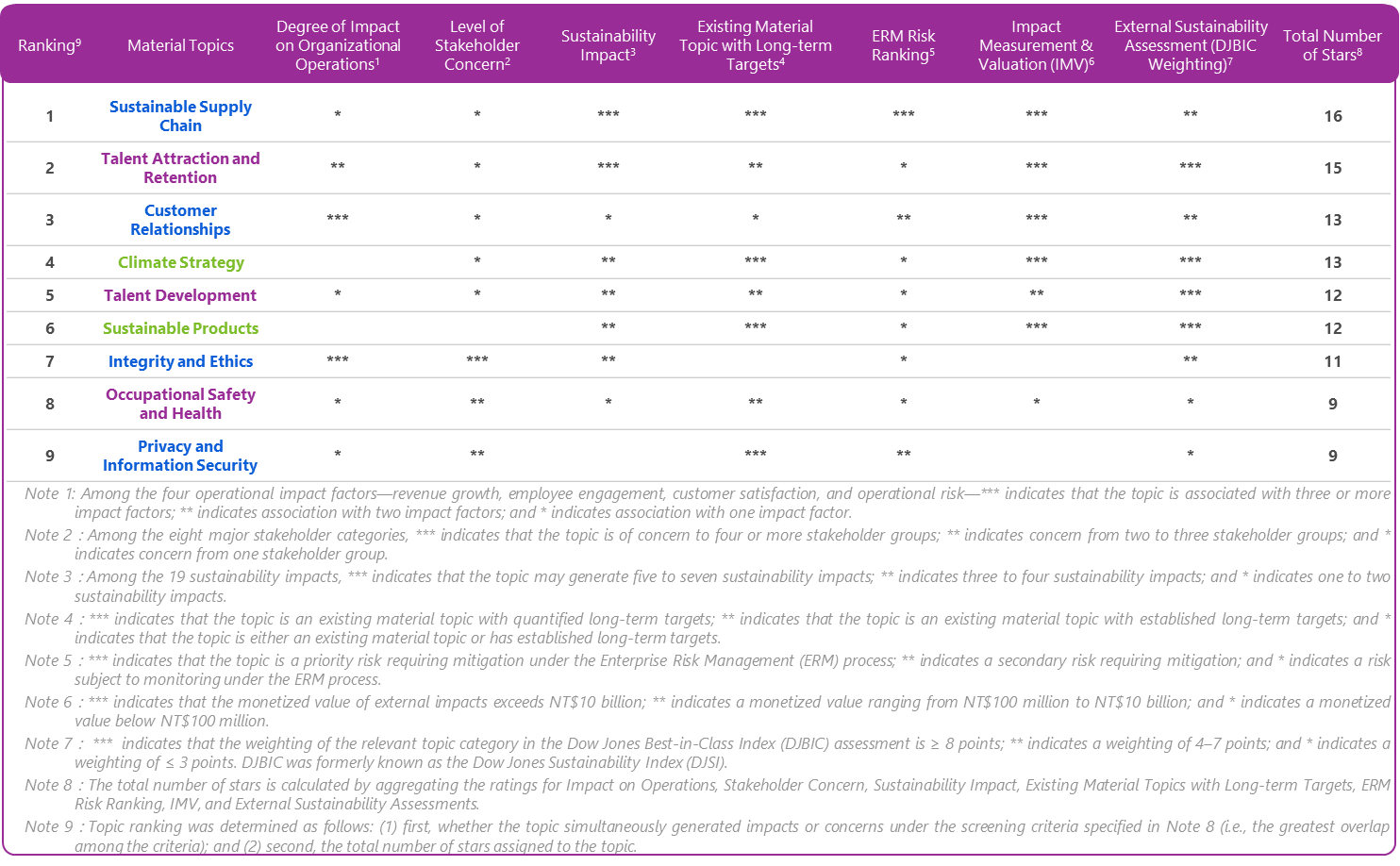
Ranking of Material Sustainability Topics
Material Issues and Risk Management
(For the complete risk assessment and mitigation measures, please refer to P39-46 of the Sustainability Report.)
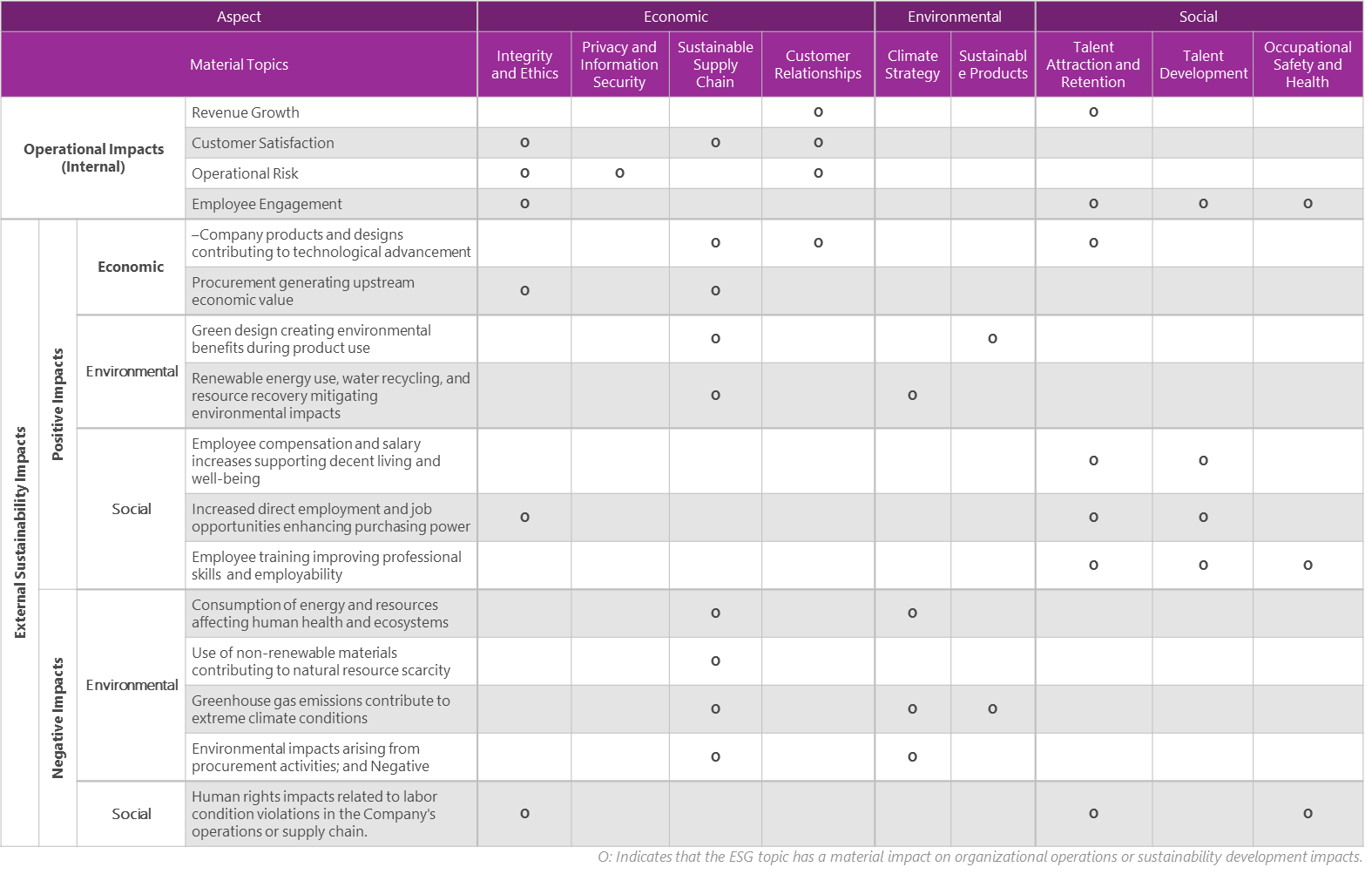
Sustainability Impact
Impact Path
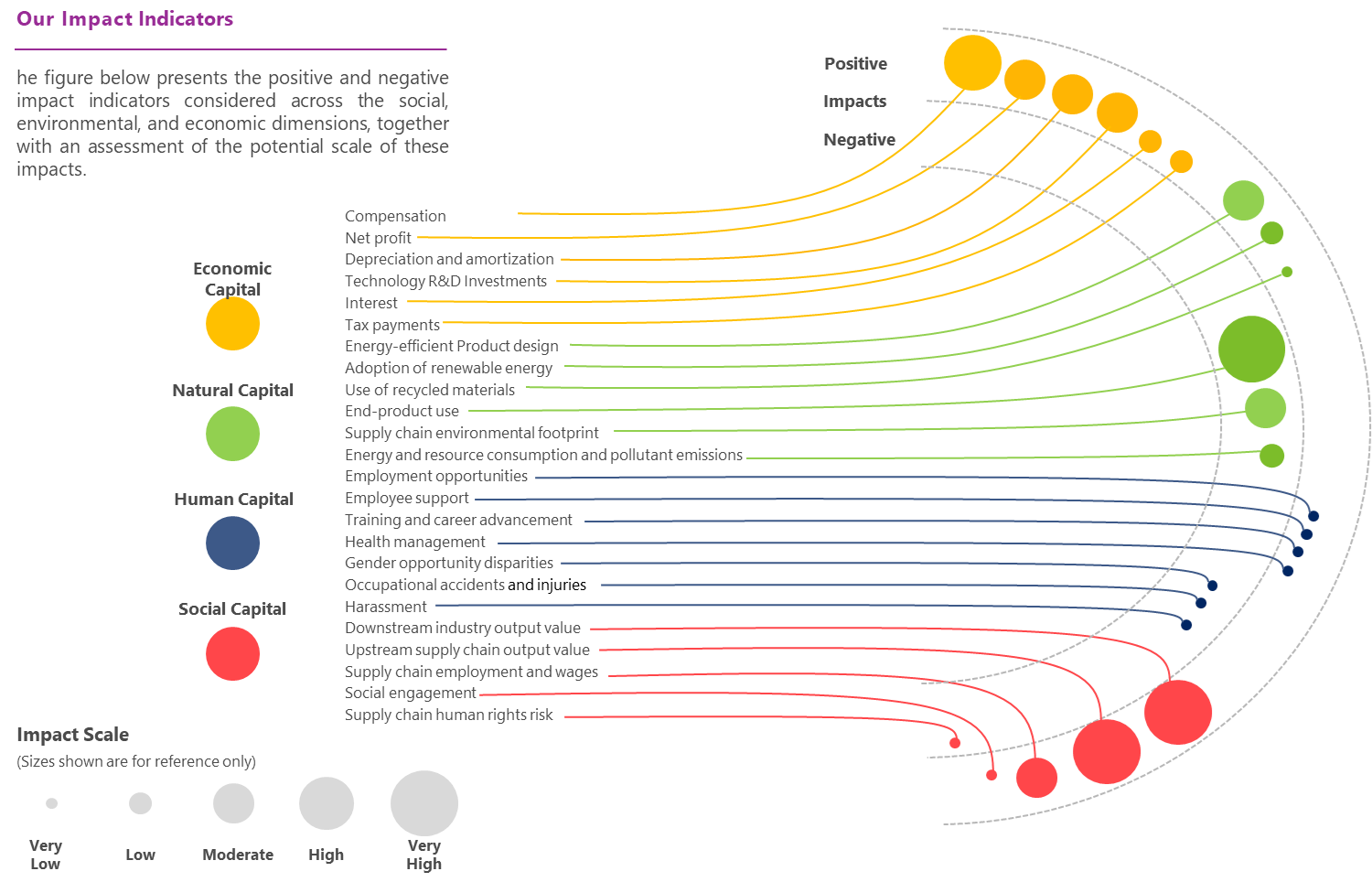
The Company to evaluate both the impacts of its operations on the environment and society and how these issues, in turn, affect corporate resilience and growth potential, thereby supporting the development of more forward-looking strategies. In response to this trend, the Company has adopted double materiality as its core framework and introduced an Impact Measurement and Valuation (IMV) mechanism. From an outside-in perspective, the Company combines profit-and-loss-based impact accounting with cause-and-effect impact pathways to comprehensively assess how value chain activities—from supply chain management and operations to product applications—affect human well-being.Through a systematic analytical process, environmental and social externalities that are not fully reflected in market prices are quantified and converted into consistent monetized indicators. In addition, the Company adopts an Integrated Profit and Loss (IP&L) perspective to evaluate financial performance and non-financial impacts using a unified measurement basis, generating more diversified and forward-looking insights for decision-making. This enables the Company to pursue long-term, stable financial growth while creating shared value for society and promoting human well-being.
In 2025, Compal generated operating revenue of NT$757.5 billion. For every NT$1 of revenue generated, the Company created NT$1.89 in Net Positive Impact (NPI) for stakeholders, comprising NT$1.6 trillion in positive impacts (social benefits) and NT$147.8 billion in negative impacts (social costs). Among these, the most significant impacts were associated with sustainable supply chain management, customer relationships, sustainable products, climate strategy, energy management, talent attraction and retention, and talent development. From an operational perspective, contributions from operating profit, taxes, interest, employee compensation, depreciation and amortization, and investments in new technology development generated a total Gross Value Added (GVA) of NT$58.5 billion for stakeholders. From an environmental perspective, energy and resource consumption and pollutant emissions during production processes generated approximately NT$1.3 billion in social costs related to socio-economic impacts, human health, and ecosystems. However, through proactive renewable energy deployment, the Company also created approximately NT$850 million in environmental benefits. From a social perspective, the Company created employment opportunities for local communities through talent recruitment and enhanced employees‘ salary growth potential through comprehensive training and promotion mechanisms. In addition, by integrating diversified health management initiatives and employee support programs, the Company promoted physical and mental well-being and work-life balance, generating a total positive employment impact valued at NT$840 million. However, due to industry characteristics, disparities in opportunities for female employees to access high-paying positions resulted in potential salary compensation costs. Together with the physical, psychological, and medical costs arising from occupational accidents and workplace harassment incidents, these factors generated a negative employment impact valued at NT$690 million. Furthermore, the Company's continued investment in social care initiatives and volunteer activities created social value amounting to NT$17.24 million.
From a value chain perspective, the Company's procurement activities generated NT$426 billion in output value across the global supply chain, creating more than 75,000 employment opportunities and NT$14.2 billion in wage income. However, the environmental footprint and potential human rights risks associated with supply chain activities generated NT$5.6 billion in social costs.On the product side, the Company's personal computers and smart devices generated NT$1.1 trillion in industrial output value for customer industries. However, greenhouse gas emissions arising from energy consumption during product use and end-of-life treatment generated NT$140.3 billion in carbon-related social costs. Meanwhile, energy-efficient product designs and the use of recycled materials avoided 670,000 metric tons of greenhouse gas emissions, generating environmental benefits valued at NT$5.1 billion. These efforts further supported customers in achieving decarbonization targets and promoted shared growth across the value chain.
By incorporating impact-oriented thinking into its decision-making processes, the Company no longer focuses solely on short-term performance and cost efficiency but also evaluates the long-term environmental and social impacts of its decisions, thereby redefining the meaning of growth. This approach enables the Company to consider broader and longer-term implications and identify the risks and opportunities that sustainability issue management may bring to future development. Through more sustainable, innovative, and ambitious actions, the Company is committed to achieving a Net Positive impact and fostering mutually beneficial partnerships between business and society through its core technologies and collaboration with stakeholders.
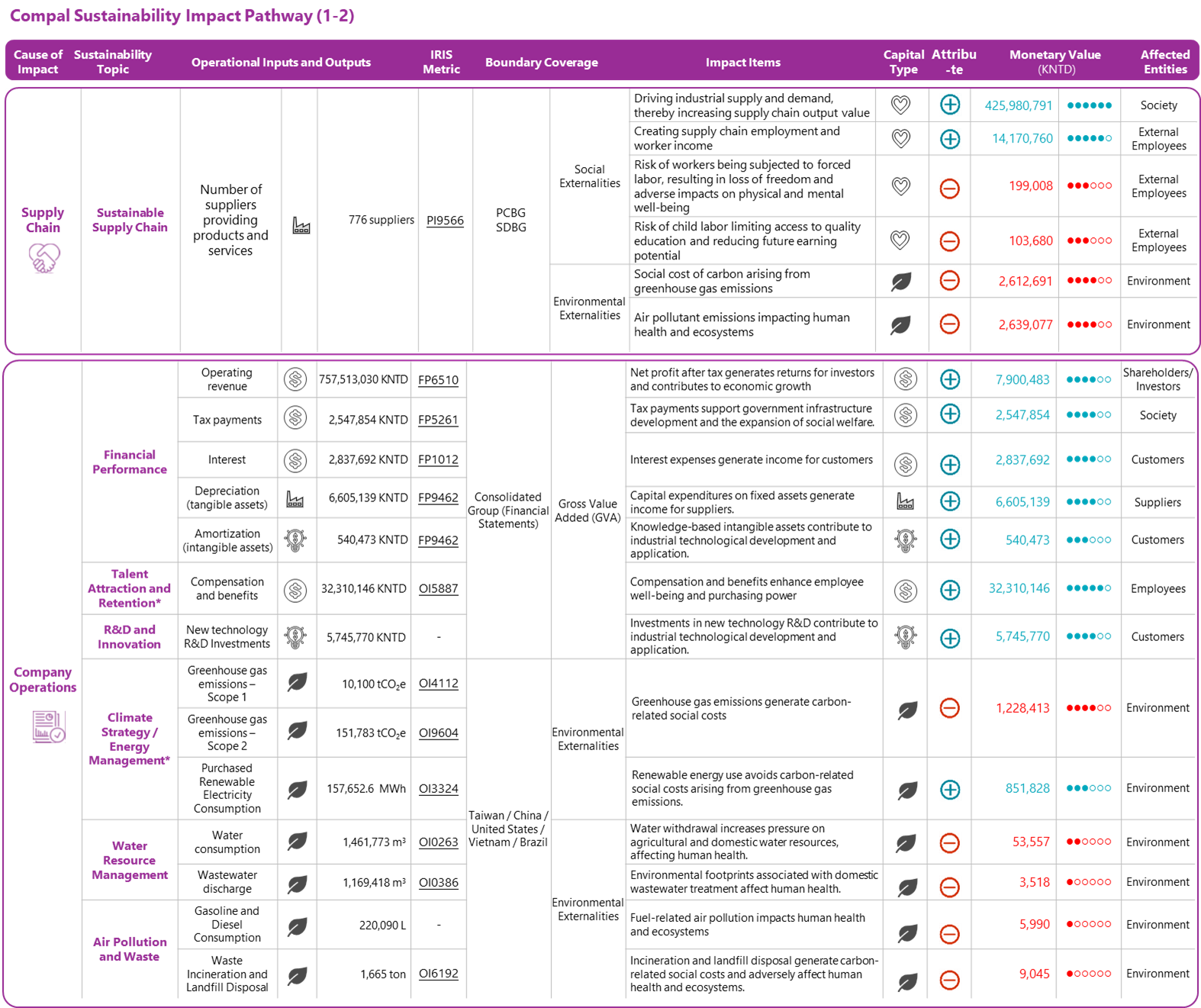
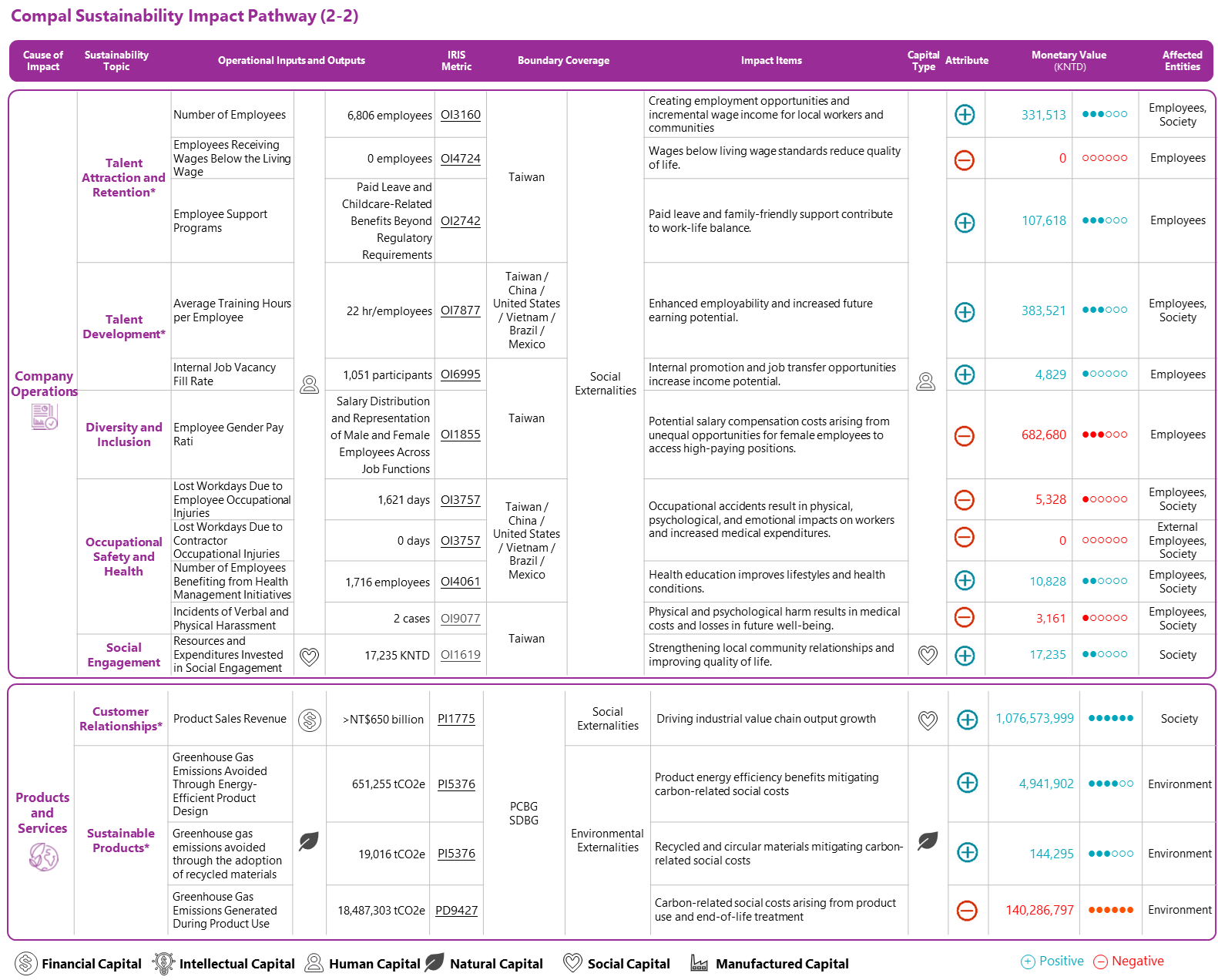
Note 1: IRIS (Impact Reporting & Investment Standards) is a standardized indicator framework developed by the Global Impact Investing Network (GIIN) for measuring corporate social, environmental, and economic performance, with the aim of enhancing the comparability of impact investments.
Note 2: Externalities refer to the positive or negative impacts on human well-being arising from the interdependent interactions between Compal operational activities and various forms of capital, where the Company does not directly receive benefits from or bear the costs of such impacts. Compal follows assessment frameworks including the Natural Capital Protocol, the Social & Human Capital Protocol, and ISO 14008:2019 Environmental Management — Monetary Valuation of Environmental Impacts and Related Environmental Aspects. The Company also integrates the Impact-Weighted Accounts (IWA) methodology developed by Harvard Business School and the valuation methodologies of the Value Balancing Alliance (VBA) to convert various environmental and social externalities into a common monetary language that are easier to understand and evaluate.
Note 3: Among the impacted stakeholders, “Society” refers to interpersonal networks characterized by shared norms, values, and consensus that facilitate cooperation within and between groups (Social & Human Capital Protocol, 2019). “Environment” refers to the stock of renewable and non-renewable natural resources on Earth (such as plants, animals, air, water, soil, and minerals) and the resulting flows of benefits or services provided to humans (Natural Capital Protocol, 2016). “External Employees” refers to employees of suppliers or contractors, while “Internal Employees” refers to employees of Compal.
Note 4: Gross Value Added (GVA) evaluates the difference between intermediate inputs and final outputs generated during corporate operations, while also considering original inputs and public expenditures, thereby reflecting the benefits created for different stakeholders through economic activities.
Note 5: The increase in supply chain output value is calculated using the Input-Output Model, including economic benefits generated by supply and demand effects across industrial value chains resulting from procurement demand, as well as employment opportunities and salary income created, together with associated environmental and human rights issues. Reference sources include the OECD Input-Output Tables (2025), EXIOBASE 2, and databases from UNICEF and Walk Free.
Note 6: Environmental externalities are calculated using the Environmental Profit and Loss (EP&L) methodology, taking into consideration carbon-related social costs, human health damage costs, and ecosystem damage costs arising from greenhouse gases, air pollution, waste, and water resource consumption. Reference sources include the United States Environmental Protection Agency (US EPA, 2023), Organisation for Economic Co-operation and Development (OECD, 2012), and CE Delft (2018).
Note 7: The social costs arising from occupational accident incidents are calculated based on employees’ willingness-to-pay value for avoiding occupational accidents, as well as the medical resource expenditures associated with such incidents. The methodology references UK Health and Safety Executive (UK HSE, 2017), Jiune-Jye Ho (2005), and the Institute of Labor, Occupational Safety and Health (2013).
Note 8: Health management refers to the early identification of groups with conditions such as hypertension, hyperlipidemia, hyperglycemia, and obesity through regular health examinations, followed by the implementation of various programs to appropriately control employees’ risks of cardiovascular diseases. The relevant coefficients reference Chieh-Hsien Lee (2009).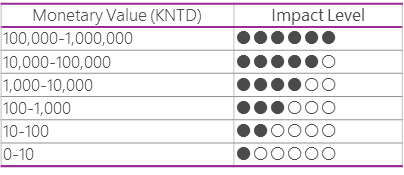
Note 9: Employability and future earnings evaluate how employees acquire professional skills and knowledge through Company training programs, thereby enhancing productivity and improving employability for career development. The reference source is the Value Balancing Alliance (VBA, 2021). Since productivity improvements resulting from employee training have already been reflected in the Company’s financial statements, this indicator only evaluates the contribution to well-being arising from income changes after employees who received Company training change jobs.
Note 10: Employment opportunity indicators include incremental wages generated for workers, employee support programs promoting work-life balance, salary growth resulting from internal promotion opportunities, potential salary compensation arising from gender opportunity gaps, and physical, mental, and losses in well-being resulting from workplace harassment. The reference source is Impact-Weighted Accounts (IWA, 2021).
Note 11: The value of social participation is based on the community investment evaluation mechanism developed by the London Benchmarking Group (LBG). It calculates cash contributions, materials, time, and management costs invested in public welfare activities to evaluate and allocate the quantified benefits of various projects. For further details, please refer to the “Social Engagement” section.
Note 12: Products and services focus on the Personal Computer Business Group (PCBG) and Smart Device Business Group (SDBG). By considering the supply-demand relationship between sales revenue and customer industry output value, the Company evaluates the indirect economic value created by product sales, as well as the environmental external benefits and costs arising from environmentally friendly product design and the product use and end-of-life disposal stages.
Note 13: Considering differences in economic conditions among countries, valuation coefficients are adjusted using Gross National Income (GNI) per capita measured by Purchasing Power Parity (PPP) for each region. Inflation and exchange rate factors are also considered to align time boundaries to the monetary value of the base year. The methodology references Organisation for Economic Co-operation and Development (OECD, 2012) and PwC UK (2015). Due to methodological updates, the base year has been adjusted from 2021 to 2023.
Material Issues for Enterprise Value Creation
To understand the impact and long-term value of Compal's material issues on its business operations, this section outlines the business case, response strategies, targets, and progress for three material issues—Privacy and Information Security, Sustainable Products, and Sustainable Supply Chain.
Material
Issue |
Privacy and Information Security |
Sustainable Products |
Sustainable Supply Chain |
Business
Case |
Advances in technology and techniques
increase the likelihood that Compal's
central information control system is
exposed to hacker threats, potentially
exposing the company to the risk of
operational disruption and leakage of
confidential documents. Compal
strengthens its digital resilience and,
with a proactive defense mindset,
implements information security
controls to Identify, Protect, Detect,
Respond, and Recover—aiming to earn
customer trust, fulfill its commitments
to shareholders, and achieve sustainable
business operations. |
Climate change is drawing increasing
attention: customers require the company
to apply for environmentally friendly labels,
and international product energy-consumption
standards and regulatory requirements continue
to evolve. Driving the transition to green products
will increase the company's operating costs. |
If suppliers' raw materials are affected by
price volatility, production cuts, or transport-
ation delays, the company's product shipments
may decline and thereby affect profitability. If a
supplier violates the Supplier Code of Conduct,
Compal will face reputational risk or the risk of
operating losses. In addition, as awareness of
carbon emissions rises, the company may face
the risk of carbon taxes or higher compliance
costs in the future. Compal has introduced sustain-
able supply chain management to manage supply
chain ESG-related risks.
|
Business
Impact |
Risk |
Cost |
Risk |
|
Business
Strategies
|
Implement ISO 27001 and establish an
Information Security Management
System (ISMS) to fulfill the information
security strategy of “ensuring business
continuity and improving customer
satisfaction”:
- Establish an Information Security Manag-
ement Functional Team: communicate
policies and positions externally; set
objectives, integrate resources and action
plans internally; and report regularly to the
Board of Directors.
- Establish information security incident
reporting procedures, including incident
impact determination , damage assessment
, and reporting processes.
- Introduce a threat intelligence manag-
ement framework covering strategic, tactical
, and operational levels.
- Conduct regular risk assessments and
implement risk treatment measures for high
risks.
- Maintain the confidentiality, integrity,
and availability of key information assets.
- Engage all employees and contract vendors
in the process.
|
Compal has established strategies such as its Environ-
mental Sustainability Policy and Green Product Raw
Material Policy, embedding sustainability into green
product design. Compal integrates the Integrated
System for Product Development (ISPD) and COMPAL
Supplier Design Collaboration Portal System (CSDCPS)
to implement green governance throughout the entire
product life cycle. Upstream, training and CDP disclosure
guidance enhance suppliers' carbon management maturity
; downstream, product carbon footprint assessments and
circular design principles are integrated into product design
to reduce environmental impacts during product use and
end-of-life disposal. |
1.Incorporate ESG performance, operating status,
location, industry, and product relevance into supplier
selection and management.
2. Establish the “Compal Supplier Code of Conduct”
in accordance with RBA 8.0 and the Company's sustain-
ability policies.
3.Require suppliers to sign procurement agreement,
comply with international quality and environmental
standards, and progressively adopt ISO standards to
improve overall supply chain management.
4. Assess supplier ESG risks using the “Supplier ESG
Risk Assessment Questionnaire” and apply tiered
management and corresponding measures based on
risk severity.
5.Build supply chain sustainability through supplier
conferences, Compal ESG Go Training Platform, and
carbon-reduction collaboration projects, advancing
the low-carbon transition and a sustainable value chain.
|
|
Target/
Metric
|
1.Availability of critical systems > 99.44%
2. Click-through rate for employee social
engineering drills < 5%
3. No complaints involving violations of information
security or personal data protection resulted in judicial
action.
|
1.Adopt recycled plastic material with a recycling rate
>55% in green products.
2.Incorporating four types of recycled materials in green
product design.
|
Advance the ONE+N Net Zero Project and provide in-depth
guidance to suppliers for joint carbon reduction. In 2025,
Compal continued to advance supply chain carbon inventories
, and expects by 2025, together with its supply chain partners,
to achieve a cumulative carbon reduction of 10,000 tCO2e |
| Target Year |
2026 |
2030 |
2025 |
Progress
in 2025
|
1.Availability of critical systems: 99.9%
2. Click-through rate for employee social engineering
drills : 1.4%.
3. No complaints involving violations of information
security or personal data protection resulted in judicial
action.
|
1.Incorporating three different types of recycled materials,
including plastic, steel, and magnets into product design,
34% of projects that include two or more types of recycled
materials.
2. 62 new projects, of which 56% adopted recycled plastics
materials with a recycling ratio of over 40%.
|
By the end of 2025, Compal and its supply chain partners had
jointly reduced carbon emissions by 14,761 tCO₂e, achieving
147% of the target. |
|
Executive
ompensation
|
Compal incorporates climate-related performance indicators into the annual performance evaluation of senior executives and links them to annual variable compensation. The
achievement of ESG and climate targets accounts for 5% of the overall performance evaluation weighting. The related performance indicators are established in accordance with
the Company's annual sustainability strategy and climate management objectives, covering greenhouse gas reduction, energy management, and carbon emissions management,
and other approved climate-related management indicators. Progress and performance against these indicators are reviewed regularly. |
Material Issues for External Stakeholders
To understand the positive/negative impacts of Compal‘s material issues on external stakeholders, this section further analyzes the impact of two material issues—Sustainable Products and Sustainable Supply Chain —on external stakeholders and conducts an impact valuation.
Material
Issue |
Sustainable Products |
Sustainable Supply Chain |
Cause of
the Impact |
Products/Services, Supply Chain |
Operations, Products/Services, Supply Chain |
Business activity
coverage |
>50% of business activities |
>50% of business activities |
External stakeholder(s)/
impact area(s) evaluated |
Environment, customer/end-users,
external employees (supply chain and contractor) |
Environment, society, external employees
(supply chain and contractor) |
|
Topic relevance
on external
stakeholders
|
Positive impact
Product design and raw material use affect the carbon
footprint across the product‘s entire life cycle. By
introducing recycled materials, promoting recycled plastics
materials, and improving energy efficiency, Compal deepens
green design and the application of the circular economy,
reduces the environmental impact of the product life cycle,
and supports the low-carbon transition of the value chain.
|
Positive impact
In response to climate change and the Paris Agreement
, companies must not only manage the carbon emissions
from their own operations but also actively reduce greenhouse
gas emissions across the value chain, so as to drive the value
chain‘s low-carbon transition and achieve net-zero targets.
The value chain is a major source of greenhouse gas emissions,
so suppliers’ carbon management capabilities have a significant
impact on overall emissions reduction. Compal continues to advance
supplier ESG management, supplier capacity building, and carbon
reduction plans, and invites suppliers to participate in CDP disclosure
to enhance their greenhouse gas management capabilities and
decarbonization performance, jointly fulfilling the long-term
commitment to net-zero emissions across the value chain.
|
| Output Metric |
Compal's products incorporate energy-saving designs to
avoid greenhouse gas emissions, resulting in approximately
651,255 tCO2e of avoided emissions in 2025. |
Through a“Lead-supplier strategy(One+N)” approach, Compal
drives substantive carbon reduction actions among supply chain
manufacturers. In 2025, the final cumulative carbon reduction
reached 14,761 tCO2e , an achievement rate of 147 % |
Impact valuation
and Impact Metric |
Social Costs Caused/Avoided:
Compal applies the Impact Measurement and Valuation (IMV) methodology and international research to convert the environmental externalities
caused or avoided through product energy-saving benefits and supplier carbon reduction achievements into monetary values, enabling the
Company to measure the value it creates for society and the social costs it helps avoid.
|
The carbon reduction achievements resulted in NTD 4,941,902,000
in avoided social costs of carbon. |
The carbon reduction achievements resulted in NTD 35,339,206.773
in avoided social costs of carbon. |