Assessment of Nature-Related Risks and Opportunities (TNFD)
With the increasing impact of global economic activities on ecosystems, in addition to the risks and opportunities related to climate change, the issue of biodiversity loss has gradually become the focus of stakeholders.
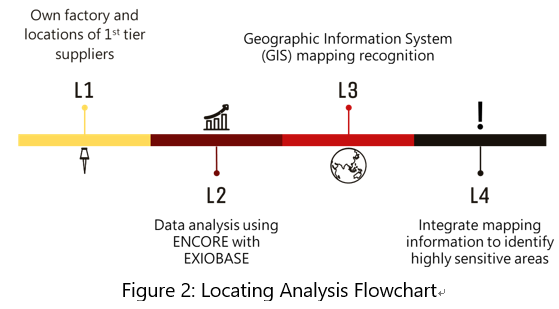
In 2024, Compal has followed the LEAP methodology recommended by The Taskforce on Nature-related Financial Disclosures (TNFD) to complete the biodiversity spatial locating analysis of its own plants and tier 1 suppliers production bases (see Biodiversity Spatial Locating Analysis for details), and used The ENCORE database analyzes the countries and industries in the value chain to identify the dependencies and impacts of the value chain on ecosystem services and impact drivers (see Dependencies and Impacts Analysis for details).
Finally, through the analysis of Compal's own plants, production sites of tier 1 suppliers and the industry categories of its downstream customers, we analyzed the relevance of nature-related physical risks (e.g., water shortages), transition risks (e.g., media shortages) and systemic risks (e.g., Labor/ Human Rights) to the value chain in order to identify a list of Compal's value chain-related nature-related risks, which would serve as the basis for the subsequent refinement of the analysis of the dependency and impact pathways, and the assessment of the materiality risks (see the list of nature-related risks and opportunities in the following).
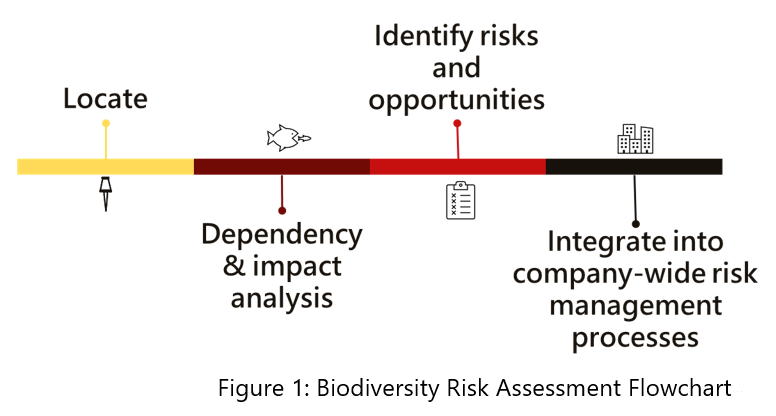
Compal plans to follow the mitigation hierarchy (avoid, reduce, restore, regenerate, transform) to achieve no net loss (NNL). In summary, through the implementation of the TNFD framework, Compal is able to gain a deeper understanding of the interaction and impact of the natural environment, and develop a set of proactive and effective risk and opportunity responses, which not only mitigates negative impact on the natural environment, but also provides long-term economic benefits and competitive advantages.
Biodiversity Spatial Locating Analysis
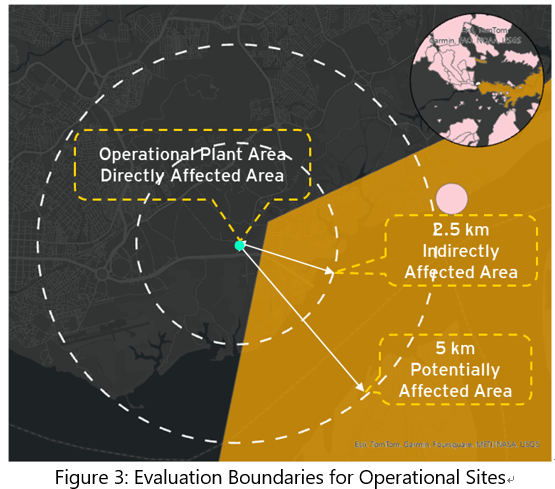
Compal follows the LEAP methodology recommended by The Taskforce on Nature-related Financial Disclosures (TNFD) to perform biodiversity spatial locating analysis. The assessment scope covers its own plants and tier 1 suppliers production bases. Through the geographical location information of the plant, a circle with a diameter of 2.5km and 5km is drawn with the plant as the center point as the assessment boundary to analyze whether the own plant and the tier 1 suppliers base are in contact with important biodiversity areas.
According to the results of this locating analysis, CEA, CEB and Compal USA (Indiana) ranked in the top three priority locations among all 19 Compal operating sites. These three plant areas were listed as important areas (material locations) for monitoring and management. In terms of supplier management, the purchase amount and locating analysis results will be considered at the same time, and the biodiversity policy will be promoted to the top suppliers.
In the future, Compal will focus on the highly sensitive areas analyzed to formulate further management measures to reduce the impact of the enterprise on biodiversity by using the AR3T action framework: Avoid, Reduce, Restore, Regenerate, and Transform.
Dependencies and Impacts Analysis
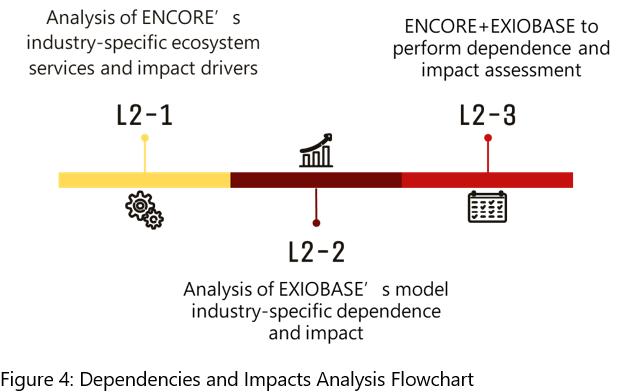
Compal uses ENCORE database combined with EXIOBASE data to conduct dependencies and impacts analysis. First, Compal and its suppliers are analyzed by ENCORE according to their industries, and the ecosystem services and impact drivers related to each industry are initially identified. Then, using the EXIOBASE input-output model, we performed the dependency and influence significance assessment on the highly relevant ecosystem services and impact drivers listed in ENCORE, and finally, based on the results of the aforementioned comprehensive analysis, we completed the dependencies and impacts significance analysis of Compal and its suppliers by industry.
1. Dependencies Analysis
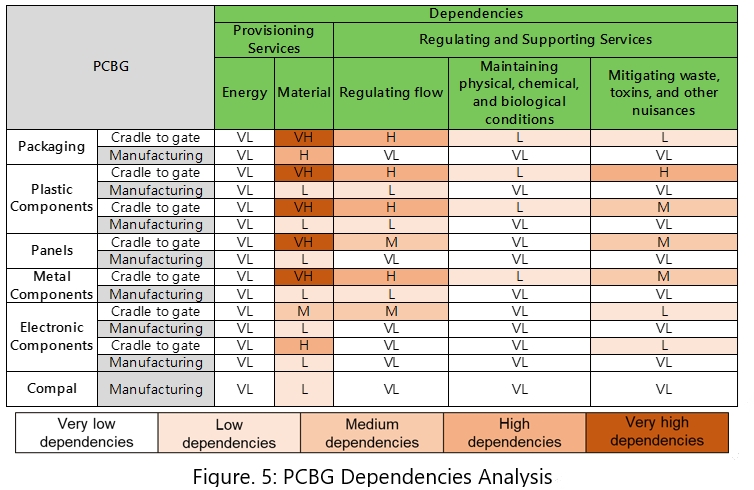
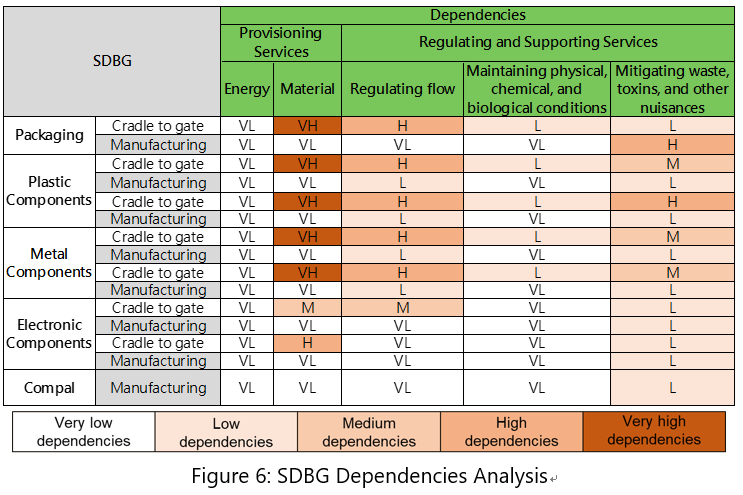
Compal analyzed the dependence of PCBG and SDBG business groups on their own operations and suppliers, and the results show that both business groups and their suppliers have a higher degree of dependence on the ecosystem services of " provisioning services - material" and "regulating and supporting services - regulating flow", and the detailed results are shown in Fig. 5 and Fig. 6.
2. Impacts Analysis
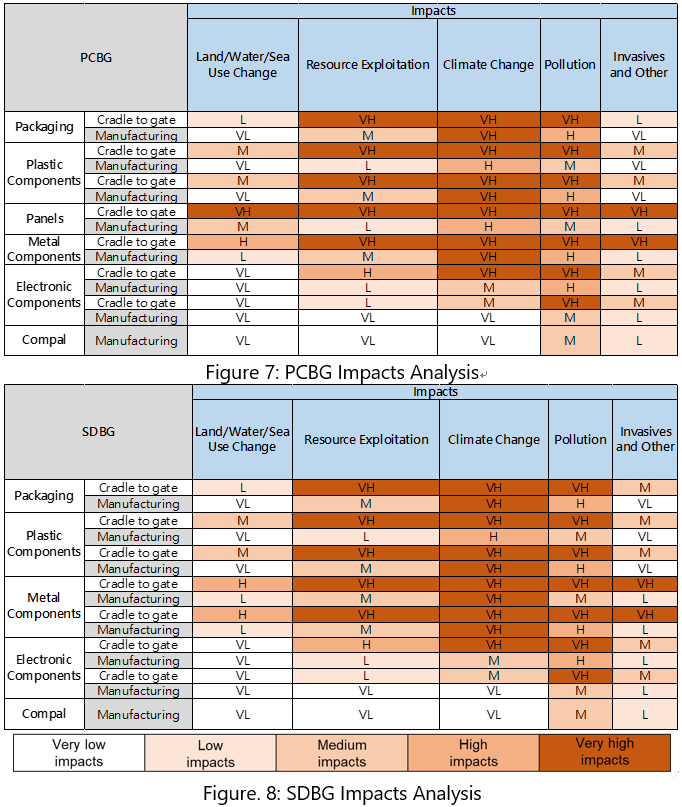
The impacts analysis results of Compal PCBG and SDBG and their suppliers show that they have a greater impact on the impact drivers of " overconsumption of resources ", "climate change", and "pollution", and the detailed results are shown in Fig. 7 and Fig. 8.
List of Nature-related Risks and Opportunities
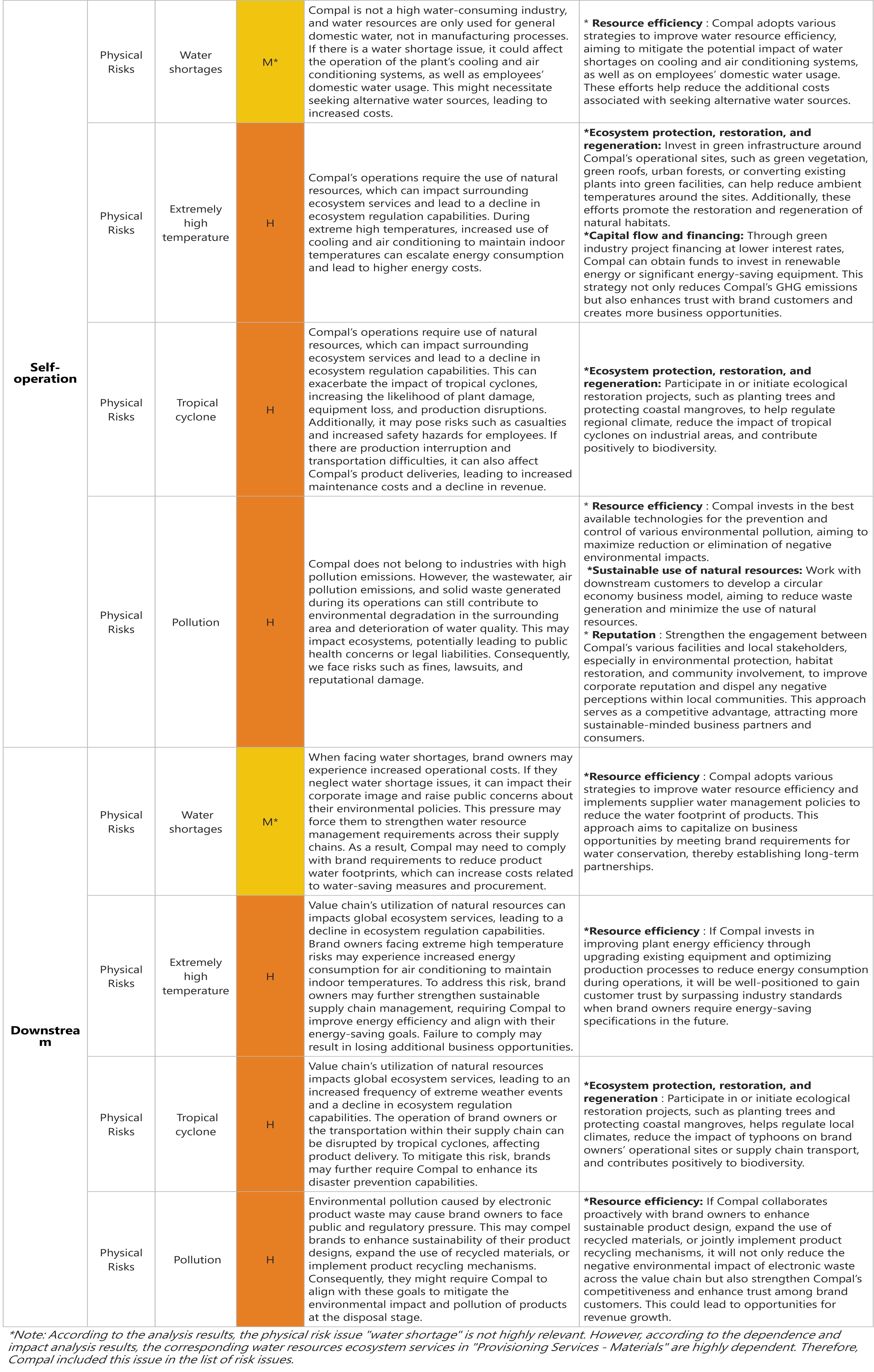
Compal uses the World Wildlife Fund (WWF) Biodiversity Risk Filter (WWF BRF) to analyze different biodiversity risk issues and Compal own plants and its tier 1 suppliers production bases and downstream industry categories value chain relevance. Based on the correlation ranking results, Compal selected highly relevant risk issues, and then explained the potential impact of the risk issues based on different value chain positions, which served as the basis for subsequent analysis of the dependence and impact pathways of each plant.
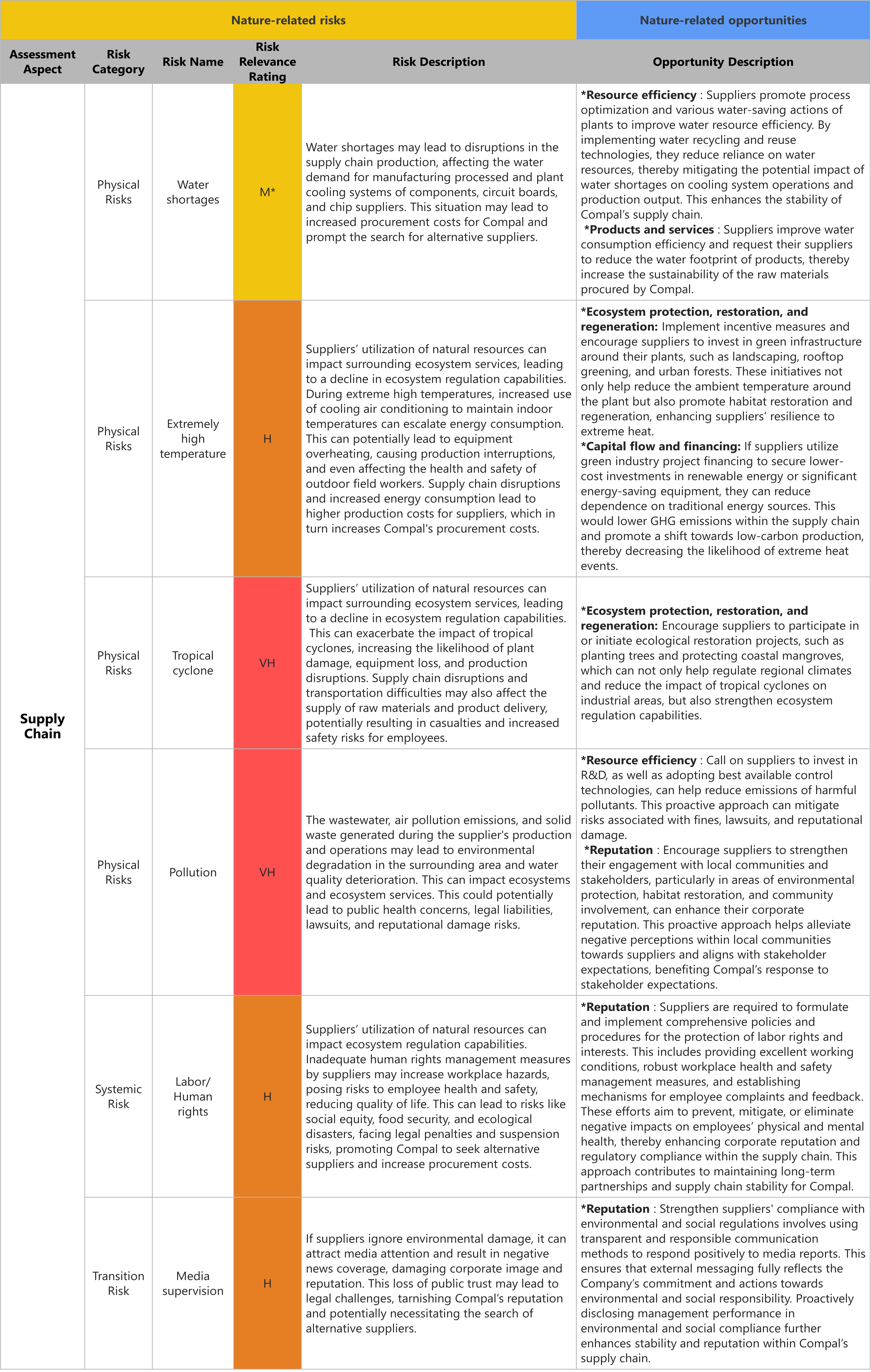
In addition, to fully identify the impact of nature on the value chain, Compal further conducted a risk relevance analysis. Based on the results, Compal mapped highly relevant risk issues to the list of opportunity issues outlined in the TNFD framework. This initial identification revealed potential nature-related opportunities at various positions within Compal’s value chain. The selected opportunity issues were then described in terms of their potential positive impacts according to their respective value chain positions. For detailed information, please see Table 1: Compal Value Chain Biodiversity Risks and Opportunities List.
Compal has long been paying attention to the impact of nature-related risks and opportunities on operations, and released the "Biodiversity and No Deforestation Policy" in 2023, incorporating Compal's commitment to biodiversity and the goal of no net loss (NNL), and encourage suppliers and business partners to plan and conduct biodiversity risk assessments, and encourage them to take measures that can reduce ecological impact. In addition, in order to respond to biodiversity risks in advance, Compal has included the identified risk issues into the company's overall risk management structure to ensure that Compal can maintain operational resilience and sustainable development when facing nature-related challenges and continue to grow in operational scale. While maintaining balance with the natural environment.
Table 1: Compal Value Chain Biodiversity Risks and Opportunities List
No Deforestation Actions
To achieve the long-term goal of Zero Net Deforestation by 2050, Compal Electronics is implementing the following strategies to progressively fulfill its forest conservation commitment:
- Forest Production Risk Assessment and Management: Completed a comprehensive inventory of forest production used in business operations, serving as the foundation for deforestation risk control and substitution planning.
- Phased Transition to Forest-Friendly Paper Product : By prioritizing the use of forest-friendly materials such as Forest Stewardship Council (FSC), Programme for the Endorsement of Forest Certification (PEFC), or recycled paper, the Taipei headquarters has fully adopted paper certified by FSC and is expanding its application to outsourced printed materials. Compal’s facilities in China have also launched paper substitution initiatives to increase the adoption of forest-friendly paper products.
- Alignment with Customer Sustainable Packaging Requirements: In line with brand customers’ sustainability policies and packaging requirements, Compal continues to adopt forest-friendly packaging materials to strengthen no-deforestation practices across the supply chain.
- External Collaboration and Stakeholder Engagement: Collaborates with suppliers, partners, and other stakeholders to identify and mitigate potential deforestation risks and land-use impacts, promoting the sustainable management of natural resources.
- Long-Term Commitment and Progress Monitoring: Compal aims to achieve Zero Net Deforestation by 2050.