Task Force on Climate-Related Financial Disclosures (TCFD)
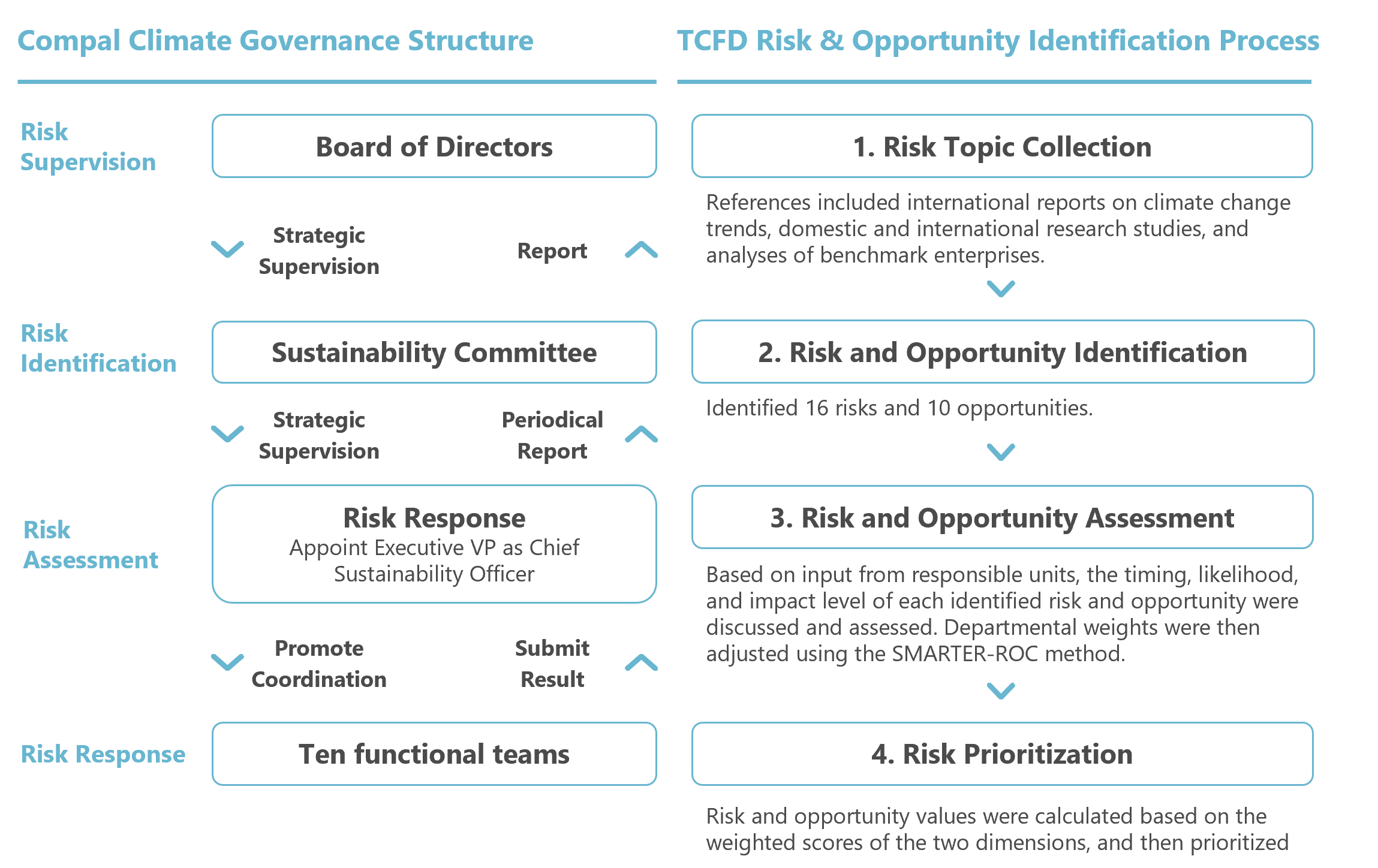
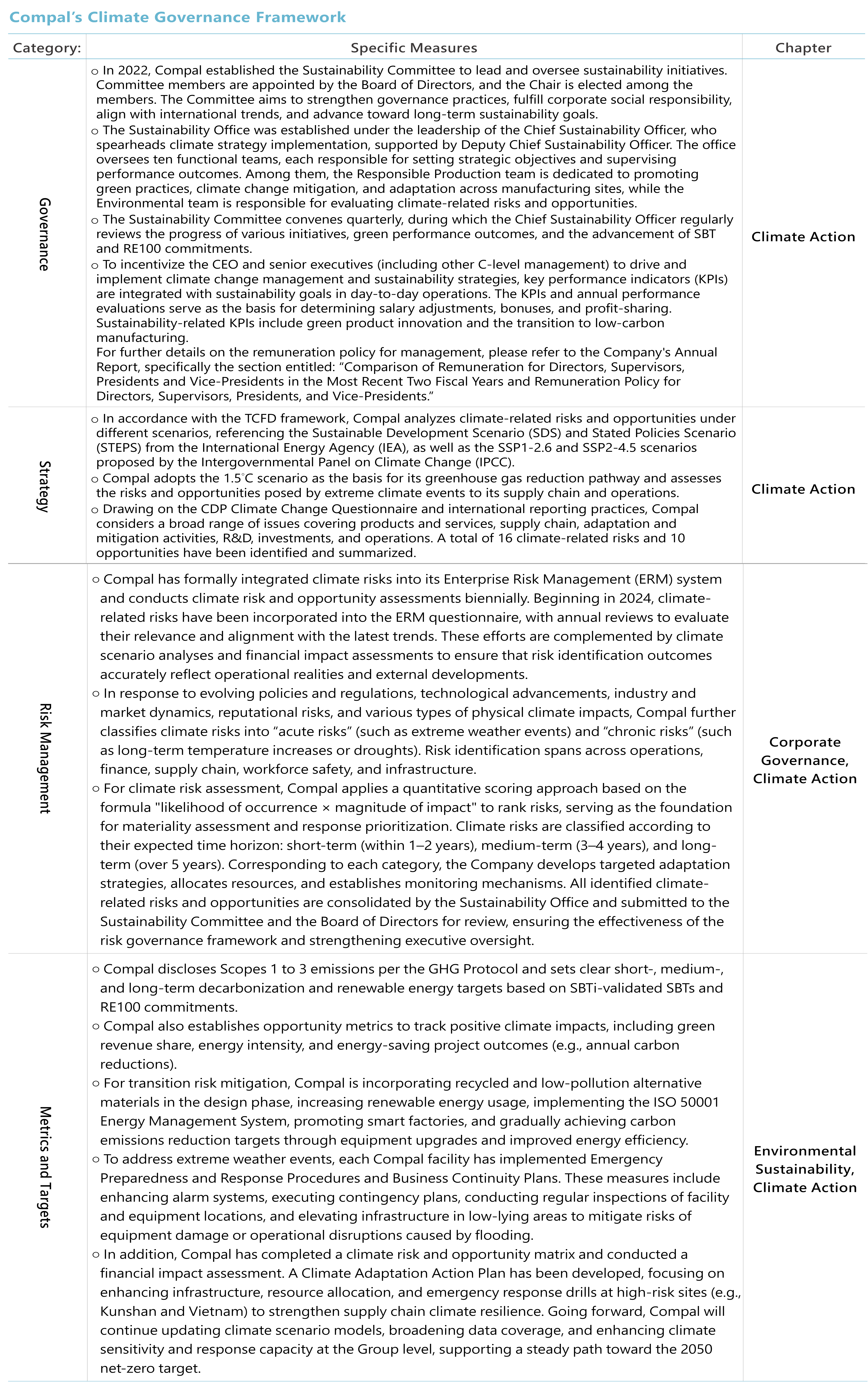
Since 2021, Compal has adopted the four core pillars under the TCFD framework to build its climate governance system, while systematically identifying climate risks and opportunities in line with international trends and investor expectations. Following the IFRS S2 standard released by the International Sustainability Standards Board (ISSB), TCFD principles have been fully integrated into the sustainability disclosure framework, emphasizing consistency, comparability, and decision relevance in disclosures.
By adhering to the TCFD framework, Compal enhances the group's operational resilience and information transparency. This enables us to respond to the potential impacts of climate change on our strategy, finances, and operations. It also serves as an important basis for future compliance with carbon border taxes, green procurement, and capital market disclosure requirements, while gradually aligning with IFRS requirements.
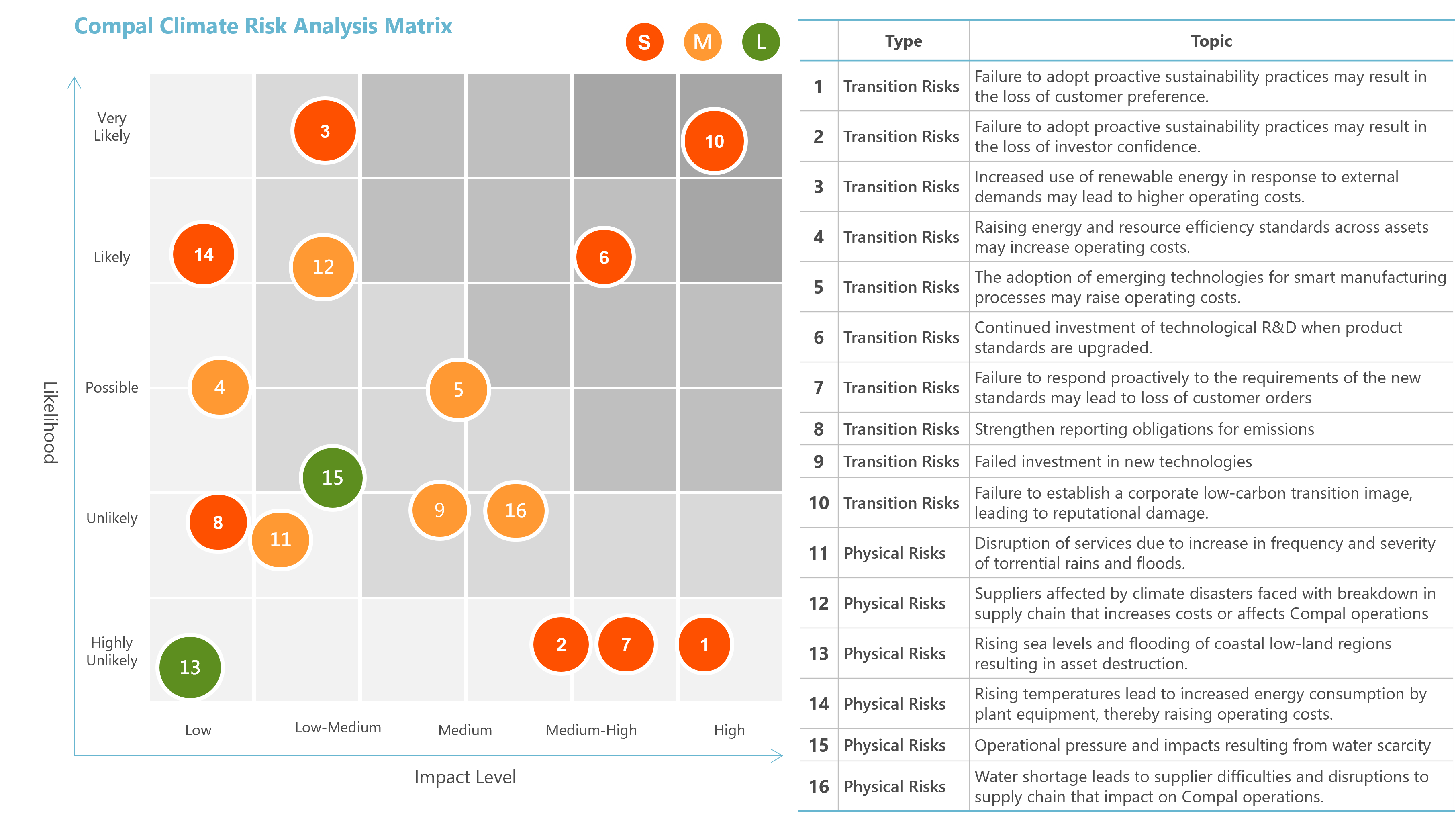
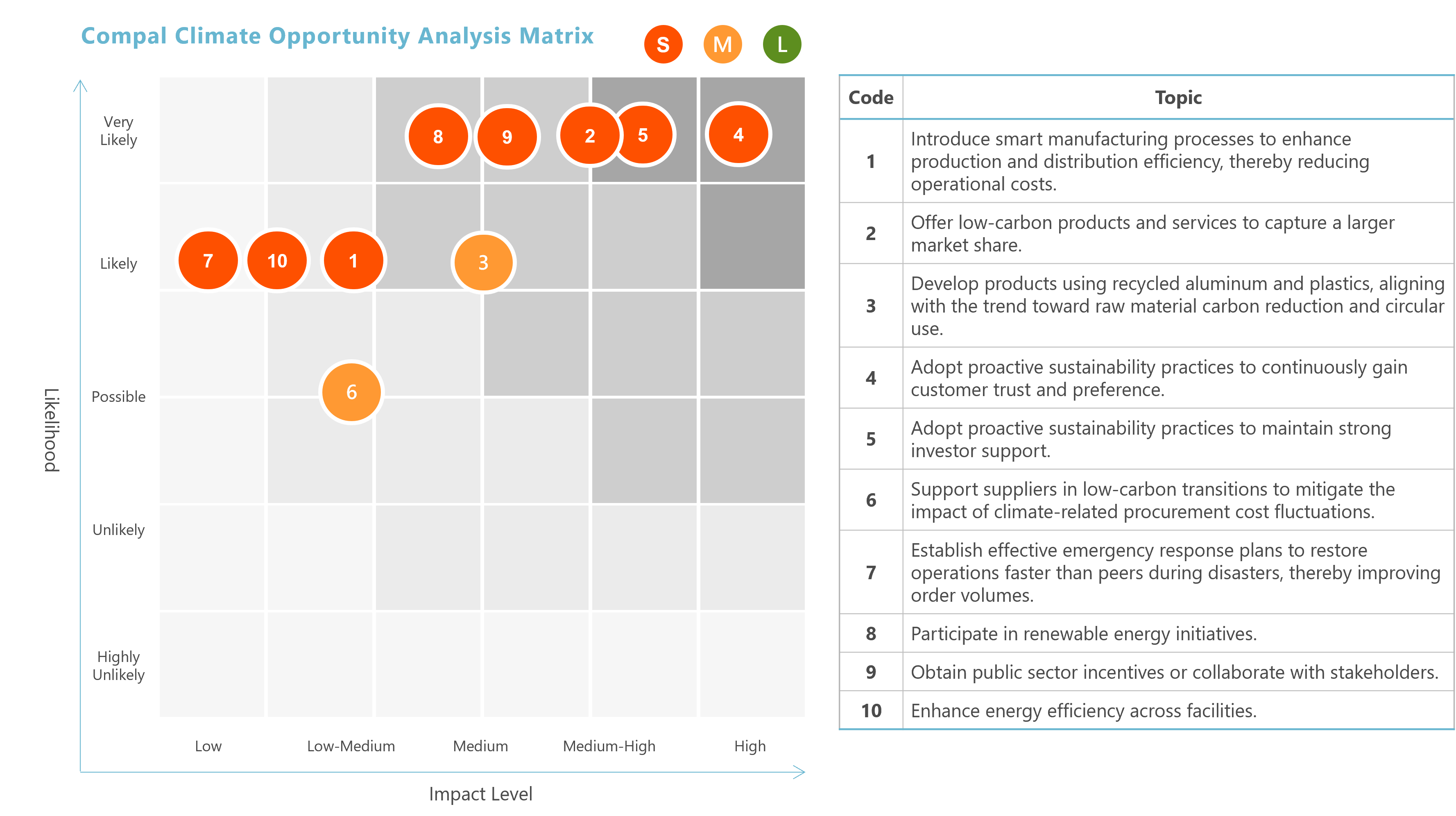
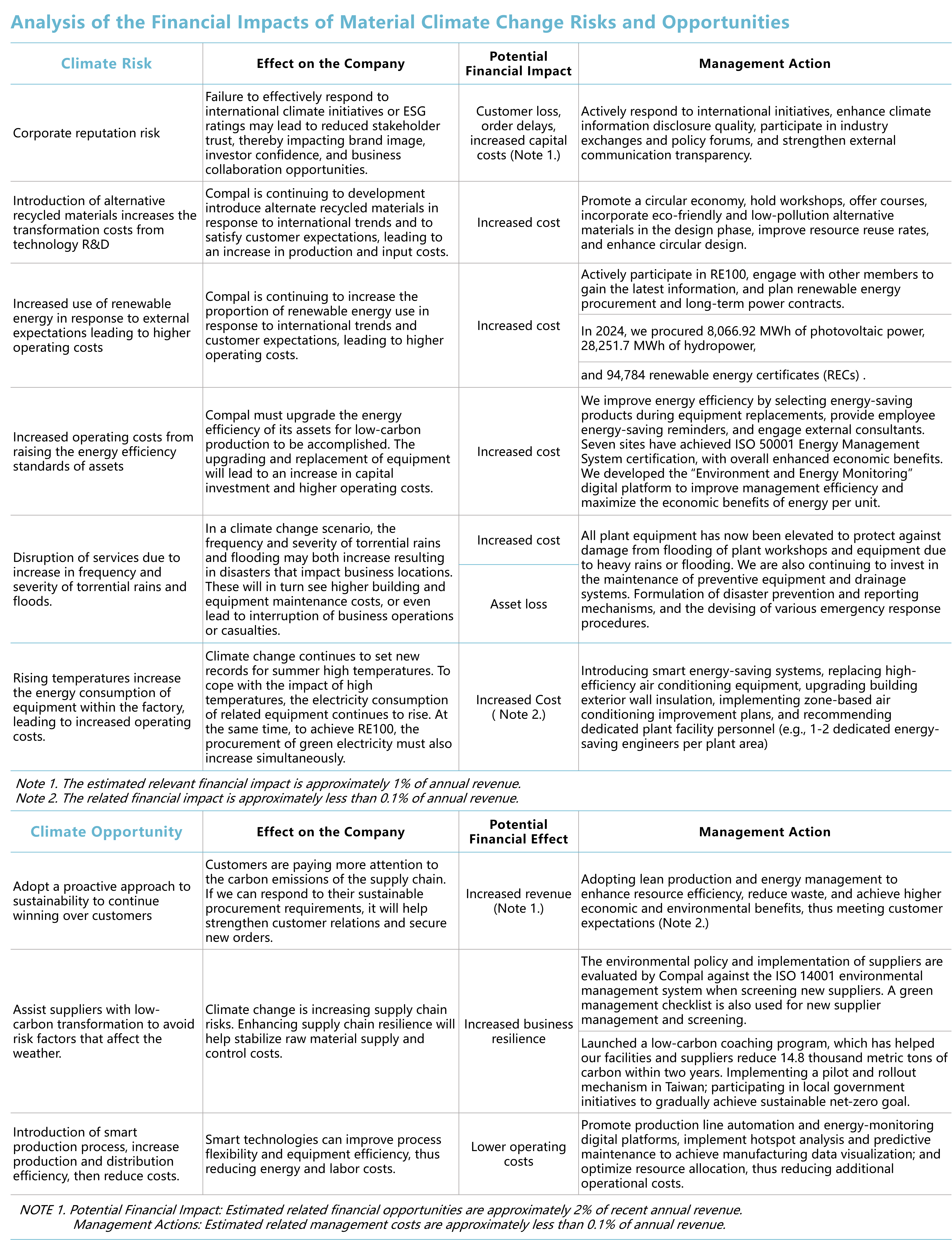
Based on the TCFD framework, Compal systematically identifies, evaluates, and manages the risks and opportunities brought about by climate change from the four major aspects of governance, strategy, risk management, and metrics and targets, and publicly discloses relevant information to respond to the expectations of investors and stakeholders for climate governance transparency.
Green Finance and Responsible Sustainable Investment
1. Strengthening Climate and Capital Governance Through International Sustainability Frameworks
Compal aligns with leading international sustainability frameworks and adopts “low-carbon transition” and “sustainable finance” as core drivers of its sustainability strategy.The Company enhances energy efficiency and expands the use of renewable energy to reduce operational emissions, while allocating capital prudently and responsibly to projects that generate positive environmental and social outcomes. This dual-axis strategy strengthens the systematic and transparent management of sustainability issues, and enhances Compal’s long-term resilience and value-creation capacity amid the global net-zero transition trend.
2. Green Energy Adoption at the Pingzhen Plants
In 2025, Compal introduced renewable energy at the Pingzhen Plant for the first time, beginning green electricity consumption in July. A total of 198,000 kWh was consumed during the year, supported by T-REC renewable energy certificates.This initiative directly reduces Scope 2 emissions, achieving an annual reduction of approximately 98.01 tCO₂e.
3. Sustainable Finance Impact — Investment in a Social Bond
Compal invested in Hua Nan Commercial Bank’s 110th Year, 2nd Unsecured Senior Financial Bond (Bond Code: G12441) with a total amount of NT$10 million in 2025. The bond is recognized by the Taipei Exchange as a Social Bond, and in accordance with the Sustainability Bond Guidelines, its proceeds are allocated exclusively to projects with social benefits, including:
˙ Financing for affordable housing
˙ Supporting relief and operational development for small and medium-sized enterprises (SMEs).
This investment aligns with global responsible investment trends, strengthens the Company’s impact in the social dimension, and leverages financial mechanisms to enhance social resilience and inclusiveness—ensuring that capital deployment contributes to meaningful and sustainable value.